
|
 |
 | | | | | | ||||||||||||||||||||||||||||||||||||||||||||||||||||||||||||||||||||||||||||||||||||||||||||||||||||||||||||||||||||||||||||||||||||||
| | | You are in: Talking Point: Forum | ||||||||||||||||||||||||||||||||||||||||||||||||||||||||||||||||||||||||||||||||||||||||||||||||||||||||||||||||||||||||||||||||||||||||
|
| | Tuesday, 19 November, 2002, 17:51 GMT Internet expansion: You asked UK e-envoy Andrew Pinder 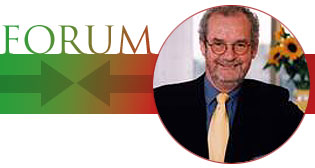
The UK Government has revealed high e-ambitions at its first ever e-conference. Prime Minister Tony Blair has promised to give every school, university, hospital and doctors' surgery a high-speed link to the internet. The hope is to make Britain the best place for e-commerce and broadband by 2005. But the government has come in for criticism for its slow rollout of broadband and for setting what critics call "unrealistic targets" for both high-speed internet access and getting government services online. E-envoy Andrew Pinder has been charged with getting services online and connecting citizens to the internet. He answered your questions in an interactive forum.
But the Government's come in for criticism for its slow rollout of broadband and for setting unrealistic targets. Andrew Pinder is the UK's e-envoy, charged with getting us all on line and connecting us all to the Net. Andrew, thank you very much indeed for joining me. The first question comes from Dr Paul Hatcher, Nutfield, Redhill: What do you think should happen to speed up the rollout of high speed internet access? How should we make it swift for everybody?
Local exchanges are also becoming connected much faster. In fact I've just come from our conference where Pierre Danon, who's head of BT Retail, has just been making a statement about BT's plans which are actually pretty ambitious and they're putting out a press release right now. They're talking about at least 80%, possibly 90% of the population be within reach of broad band by 2005, which is a very ambitious target - much bigger than anything they've ever announced before. And they're also talking about a new product called mid band which will run at 128K - about twice the speed of a normal internet narrowband connection, available to about 97% of the population very quickly. So I think that we're seeing some encouraging steps there. I'm always impatient, I always want to get it out to areas like my own for example - South Shropshire, a rural area where we don't have broadband and barely have Channel 5 television. So I'm as anxious as anyone. I think there are some encouraging steps - we're moving quite quickly.
Linda, Abberton, Essex, UK: I live in a rural area and work mainly from home, so am a heavy user of the Internet and e-mail, but without a broadband connection available (via either ADSL or cable) I am limited. There is a "North/South divide" emerging as a sort of digital divide. It just isn't happening quickly enough for many people.
I think that's the point, that the market needs two things: first of all they need the technical capability to provide the services and there are simply some areas which are so far away from an exchange that they are physically impossible to connect using ADSL. Secondly, you need enough people around an exchange who want ADSL for the providers - whether that's BT or other providers - to find it economically worthwhile. Therefore we would encourage people like your e-mailers, to contact their internet service provider and say, we want broadband - go and talk to as many of their friends as possible and all of them say, we want broadband. If you can get a critical mass of people that would make it financially worthwhile, the providers will providers will provide it.
I absolutely agree that we've got a big worry about, what I call the geographic divide - particularly rural areas being out of reach of broadband - we've got to try and do something about that. We in government are trying to do that - we are buying it. We are making sure that we aggregate our procurements so that we can get a critical mass of broadband so that other people can ride on the back of it. The Prime Minister's just announced we're going to be connecting all GPs' surgeries and all schools - that's a massive amount of broadband which we'll be buying. We hope that the suppliers will therefore be encouraged to provide it to private individuals as well.
We're not just talking about ADSL, we're also talking about technology such as satellite. There are a variety of satellite products much cheaper than you would expect available for these outlying businesses and GP surgeries. The technology is there to get broadband everywhere in the UK, not all of it using cable or ADSL but it's available through satellite.
Neil Corbett: Are you investigating BT's anti competitive behaviour? Both questions pretty critical of the fact that BT is the big name here.
The issue is, we need other telecoms providers with the capital and the incentive to move into this market. Given the state of the telecoms market over the last few years, that's been very difficult for them to do. BT happen to be around - they've got a massive presence, they've got a massive amount of capital which they're spending. I would praise them for that but I would also encourage other people, now that they see this market being created, to come and take advantage of it. I'd just like to make the point that as I said we had 5,000 connections a week last year, now we're having 30,000 - 35,000 connections being made, that is a massive amount of broadband being taken up. It's becoming much more commercially viable for other suppliers to come into the market and we want that to happen. We'll make sure that BT doesn't do anti-competitive things to keep them out of the market. But you can't criticise someone who's making a success of something just because they're being successful. You've got to try to encourage other people to come in there and take a piece of the market away from them.
Dave Reid, Whitwell, Herts: We are trying to get broadband connectivity for our village school. Due to the threshold system imposed by BT on enabling rural exchanges there is little likelihood that this will happen. Surely BT should recognise the educational value of getting broadband into schools? Sarah, UK: At the moment I am unable to receive broadband because people have told me even if they do get the threshold of 450 subscribers they need, I may still not receive it as I live too far away from the telephone exchange. Mark Tebbutt, Brinscall Lancashire: I have been running a campaign since 26th May to bring affordable broadband to the six villages served by the Brinscall (Lancashire) telephone exchange. I have managed to get 106 registrations of interest via the BT pre-registration scheme. Unfortunately BT has not even set a trigger level at which they would upgrade the Brinscall exchange So what hope does my area have of obtaining affordable broadband in the next 12 to 24 months? People seem to be confused about why they can't hop on this bandwagon.
The second issue is one of economics - this is really one issue that should be addressed to BT and not to me because it's one I push at BT as well. But BT have got to make a profit, they're a commercial organisation and they've got to provide value to their shareholders as well as a charitable service to everybody else. Trying to get BT to pour money into exchanges where there is not a viable group of customers, is very, very difficult indeed. We're going to keep on pressurising them. They're making big steps down this route but there are the laws of economics to take account of.
You're people should also investigate new technologies because there are some surprisingly new and cheap technologies around which will help their businesses. Keep on trying to get that critical mass because I think as technology advances, the critical mass required to e-enable in the exchange will come down - it will become cheaper to do that. So there will be mini pieces of technology called mini DSLAMs becoming available, where it won't need 200 or 300 people to sign up, it'll need 50 or 100 people to sign up. That's what we should be pressing for.
If you go to BT themselves - given that they are the provider in this area that we are talking about - the question should be really addressed to them. There's a lot of information available there. They've made a large number of statements today which also seem to me to be pretty significant and we should take account of that.
I do get hundreds of e-mails and my staff do try to answer them or make sure that somebody gives an answer to them. A lot of them I answer personally myself. I spend an awful lot of time doing my own e-mail - sometimes to the despair of my private office. But I'm sorry that Marcus feels disappointed in this and we'll try to do better next time.
| | Internet links:  The BBC is not responsible for the content of external internet sites Top Forum stories now: Links to more Forum stories are at the foot of the page. | ||||||||||||||||||||||||||||||||||||||||||||||||||||||||||||||||||||||||||||||||||||||||||||||||||||||||||||||||||||||||||||||||||||||
| |
|  E-mail this story to a friend E-mail this story to a friend |
| |
| Links to more Forum stories |
| | | ||
 | ||||
 | | Back to top
| ||
| ---------------------------------------------------------------------------------- To BBC Sport>> | To BBC Weather>> | To BBC World Service>> ---------------------------------------------------------------------------------- © MMIII | News Sources | Privacy |




