|
 |
 | | | | | | ||||||||||||||||||||||||||||||||||||||||||||||||||||||||||||||||||||||||||||||||||||||||||||||||||||||||||||||||||||||||||||||||||||||||||||||||||||||||||||||||||||||||||||||||||||||
| | | You are in: South Asia | ||||||||||||||||||||||||||||||||||||||||||||||||||||||||||||||||||||||||||||||||||||||||||||||||||||||||||||||||||||||||||||||||||||||||||||||||||||||||||||||||||||||||||||||||||||||||
|
| | Friday, 13 December, 2002, 18:52 GMT Choices facing Gujarat firebrand 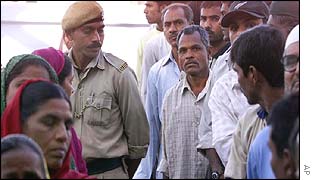 Many voters were unnerved by Mr Modi's rhetoric
Perhaps no other politician has done so much to polarise Indian public opinion as Mr Modi in recent years. He is a hate figure among Muslims. 'No protection' As many as 2,000 people, mostly Muslims, were killed in riots that engulfed Gujarat after Hindu pilgrims were burnt to death in the town of Godhra in February this year. Mr Modi's opponents feel he did not do enough to protect the Muslims. The security forces stood aside, they allege, as angry Hindu mobs killed Muslims and destroyed their property. During the election campaign, Mr Modi's firebrand rhetoric unnerved many Muslims who he accused of inflating India's population boom by producing more children and of sympathising with the Pakistani President, Pervez Musharraf. On the other hand, he became something of a hero among Hindu hardliners who felt that the deaths of Hindu pilgrims at Godhra must be avenged. Questions Narendra Modi is increasingly sure of victory and the latest opinion polls have bolstered his confidence.
Once in power will he do something to bridge the communal divide in Gujarat? Will he try to instill confidence among the state's Muslim and Christian minorities? The answer, to some extent, will be determined by the election results. If he wins a narrow majority he is likely to be more strident in pursuit of his anti-minority agenda. If insecure in power he is likely to continue peddling fundamentalist forces to keep his opponents at bay. On the other hand, if he wins a comfortable majority he could adopt a softer approach towards the minorities and pay more attention to the economic development of the state, still one of India's most industrially advanced. Difficulties Gujarat's economy, particularly industrial growth and foreign investment, suffered a serious setback during the communal riots earlier this year. But if Mr Modi chooses the hardline route, he could meet difficulties of the kind faced by his mentor, Deputy Prime Minister LK Advani. During the Ayodhya campaign, which led to the demolition of the Babri mosque in December 1992, Mr Advani employed strident rhetoric against India's Muslim community, the second largest in the world. Given India's coalition politics, this image as a Hindu hardliner has haunted him ever since. Now, as an obvious successor to Prime Minister Atal Behari Vajpayee, Mr Advani is trying to shed the image of a Hindu hardliner. But many of the BJP's coalition partners in the Indian parliament continue to have reservations about his prospective leadership. It could similarly be difficult for Narendra Modi to abandon the anti-Muslim plank on which he has so far made his career. | |
See also:  12 Dec 02 | South Asia 12 Dec 02 | South Asia 12 Dec 02 | South Asia 10 Dec 02 | South Asia 08 Nov 02 | South Asia Internet links: The BBC is not responsible for the content of external internet sites Top South Asia stories now: Links to more South Asia stories are at the foot of the page. | ||||||||||||||||||||||||||||||||||||||||||||||||||||||||||||||||||||||||||||||||||||||||||||||||||||||||||||||||||||||||||||||||||||||||||||||||||||||||||||||||||||||||||||||||||||||
| |
|  E-mail this story to a friend E-mail this story to a friend |
| |
| Links to more South Asia stories |
| | | ||
 | ||||
 | | Back to top
| ||
| ---------------------------------------------------------------------------------- To BBC Sport>> | To BBC Weather>> | To BBC World Service>> ---------------------------------------------------------------------------------- © MMIII | News Sources | Privacy |