|
 |
 | | | | | | |||||||||||||||||||||||||||||||||||||||||||||||||||||||||||||||||||||||||||||||||||||||||||||||||||||||||||||||||||||||||||||||||||||||||||||||||||||||||||||||||||||||||||
| | | You are in: South Asia | |||||||||||||||||||||||||||||||||||||||||||||||||||||||||||||||||||||||||||||||||||||||||||||||||||||||||||||||||||||||||||||||||||||||||||||||||||||||||||||||||||||||||||||
|
| | Wednesday, 4 December, 2002, 13:36 GMT India and Russia's common past 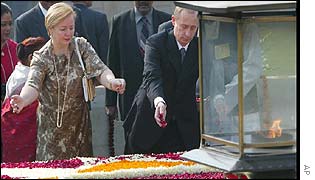 The current friendship goes back to Indian independence
India and Russia have a long history of friendship, going back more than 50 years to India's independence.
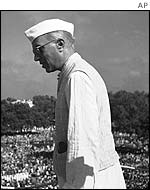
As a newly-independent nation, India under its first Prime Minister Jawaharlal Nehru pursued a non-aligned policy and sought to maintain relations with both America and the Soviet Union. But a close relationship with the former USSR also came to match India's interests for many strategic reasons. Kashmir India too sought strategic depth against China with whom it went to war in 1962 over a portion of disputed territory in Kashmir, and continues to have fractious relations.
During the Cold War, India supported the Soviet campaign in Afghanistan, much to the chagrin of America (and Pakistan). And the Soviet Union consistently gave India backing for its position over Kashmir - and as a permanent member of the Security Council was able to use its power of veto in India's favour. Soviet leader Nikita Khrushchev's trip to India in 1955 marked the cementing of a close relationship. Declaring support for Indian sovereignty over Kashmir, Khrushchev said: "We are so near that if ever you call us from the mountain tops we will appear at your side." Changing priorities The Soviet Union also played the role of peacemaker between India and Pakistan, brokering the Tashkent agreement which ended the 1965 war between the two countries.
And Russia has been, by far, India's biggest source of weapons. But since the end of the Cold War, both India and Russia have sought to improve their relations with America and to open their economies. This has changed many of their foreign policy priorities. India's testing of nuclear weapons in 1998 complicated their relationship, with Russia a signed up member of the non-proliferation club. Many shared concerns remain, however, and have become more pressing recently. Working in tandem Pakistan's erstwhile ties with the Taleban and proximity to Afghanistan made it an essential ally for America's 'war against terrorism' after 11 September. But India complained that its concerns about Pakistani-sponsored terrorism in Indian territory were being ignored by the international community.
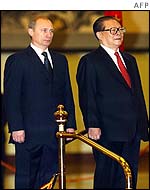
Russia has talked for several years about the formation of an India-Russia-China strategic axis as a means of countering America's global reach. Many obstacles - not least the desire of all three to improve relations with America - stand in the way of such a formation. But the joint declaration signed by China and Russia in Beijing on Monday referred to a "future multipolar world". And the concerns of all three about terrorism and Muslim insurgents in their territory, as well as their immediate wariness of possible military action in Iraq, could provide the starting point for such a relationship. | | See also:  04 Dec 02 | South Asia 02 Dec 02 | South Asia 02 Dec 02 | South Asia 15 Nov 02 | Business 18 Apr 02 | Business 06 Nov 01 | Europe 13 Feb 01 | South Asia Internet links: The BBC is not responsible for the content of external internet sites Top South Asia stories now: Links to more South Asia stories are at the foot of the page. | |||||||||||||||||||||||||||||||||||||||||||||||||||||||||||||||||||||||||||||||||||||||||||||||||||||||||||||||||||||||||||||||||||||||||||||||||||||||||||||||||||||||||||
| |
|  E-mail this story to a friend E-mail this story to a friend |
| |
| Links to more South Asia stories |
| | | ||
 | ||||
 | | Back to top
| ||
| ---------------------------------------------------------------------------------- To BBC Sport>> | To BBC Weather>> | To BBC World Service>> ---------------------------------------------------------------------------------- © MMIII | News Sources | Privacy |