|
 |
 | | | | | | |||||||||||||||||||||||||||||||||||||||||||||||||||||||||||||||||||||||||||||||||||||||||||||||||||||||||||||||||||||||||||||||||||||||||||||||||||||||||||||||||||||||||||||||||||||||||||||||||||||||||||||||||||||||||||||||
| | | You are in: South Asia | |||||||||||||||||||||||||||||||||||||||||||||||||||||||||||||||||||||||||||||||||||||||||||||||||||||||||||||||||||||||||||||||||||||||||||||||||||||||||||||||||||||||||||||||||||||||||||||||||||||||||||||||||||||||||||||||||
|
| | Tuesday, 3 December, 2002, 12:36 GMT Kabul seeks peace in Afghan west 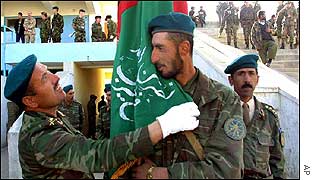 Loyalty is a difficult issue for the new Afghan army The Afghan Government is struggling to negotiate a ceasefire after fighting in the west of the country between rival warlords left dozens dead or wounded. Herat governor Ismail Khan, an ethnic Tajik, and Pashtun commander Amanullah Khan have called a halt to fighting while a delegation from the capital Kabul investigates their grievances. President Hamid Karzai, who is attending a meeting of United Nations representatives and donor countries in Germany, urged the two commanders to bury their differences. On Monday, plans were unveiled for a 70,000-strong national army for Afghanistan which would be loyal solely to Mr Karzai's government. Its creation will mean that all private militias like those involved the fighting will be banned. Meanwhile more details have been released about arrests of suspected Taleban militants inside Afghanistan.
Among them was an Iraqi Kurd arrested in Kabul on 22 November for allegedly plotting to assassinate Mr Karzai or his Defence Minister, Mohammad Fahim. Mr Karzai announced several arrests on Monday, and said the Taleban leader, Mullah Omar, was at large and hiding in the south-west of the country. US troops fired on Amanullah Khan and Ismail Khan temporarily halted the fighting on Monday after pounding each other's positions for three days near Shindand air base.
On Sunday, a US B-52 bomber dropped seven 900-kilogram (2,000-pound) laser-guided bombs near the front line of the fighting. US military spokesman Colonel Roger King told AFP news agency that someone had fired on American troops gathering information about the clashes, but he did not know which side. Ismail Khan has accused his rival of allying himself with remnants of the ousted Taleban regime, while Amanullah Khan is pressing for Pashtun representation in Herat's government. "There will be no solution if this is not done," he told Reuters news agency. "Of course, if this does not happen, as a way out of the conflict we want Ismail to go to Kabul and would accept a new governor." Correspondents say the regional fighting underlines Afghanistan's continuing instability and the central government's lack of control outside the capital, Kabul. The president admitted to delegates in Bonn that his authority in Afghanistan was limited as many warlords did not respect his leadership. Attempts to form a national army have been hampered by a lack of non-partisan army volunteers and problems with convincing the different ethnic factions about how much representation they should have in the army. Afghan needs The Bonn conference comes exactly a year after Afghan and international representatives signed accords establishing the Karzai government and a UN-led peacekeeping force in Kabul. Afghan delegates estimate that at least $23bn will be needed over the next five years to rebuild the country's shattered infrastructure. As well as security issues, the conference is considering ways of developing financial and justice systems; drawing up a constitution; combating the drugs trade; investigating human rights abuses; and tackling the refugee problem. | |
See also:  01 Dec 02 | South Asia 05 Nov 02 | South Asia 15 Aug 02 | South Asia 03 Dec 02 | South Asia 09 Jul 02 | South Asia Internet links: The BBC is not responsible for the content of external internet sites Top South Asia stories now: Links to more South Asia stories are at the foot of the page. | |||||||||||||||||||||||||||||||||||||||||||||||||||||||||||||||||||||||||||||||||||||||||||||||||||||||||||||||||||||||||||||||||||||||||||||||||||||||||||||||||||||||||||||||||||||||||||||||||||||||||||||||||||||||||||||||
| |
|  E-mail this story to a friend E-mail this story to a friend |
| |
| Links to more South Asia stories |
| | | ||
 | ||||
 | | Back to top
| ||
| ---------------------------------------------------------------------------------- To BBC Sport>> | To BBC Weather>> | To BBC World Service>> ---------------------------------------------------------------------------------- © MMIII | News Sources | Privacy |