|
 |
 | | | | | | ||||||||||||||||||||||||||||||||||||||||||||||||||||||||||||||||||||||||||||||||||||||||||||||||||||||||||||||||||||||||||||||||||||||||||||||||||||||||||||||||||||||||||||||
| | | You are in: South Asia | ||||||||||||||||||||||||||||||||||||||||||||||||||||||||||||||||||||||||||||||||||||||||||||||||||||||||||||||||||||||||||||||||||||||||||||||||||||||||||||||||||||||||||||||||
|
| | Monday, 28 October, 2002, 07:51 GMT Gujarat poll dates announced 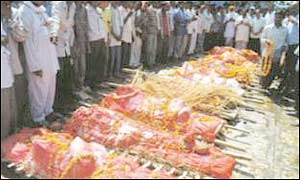 Hundreds died in the rioting India's independent election body has announced fresh polls in the state of Gujarat, which was hit by religious violence earlier this the year. Voting will take place on 12 December, with counting scheduled to begin three days later. The announcement comes even as India's Supreme Court ruled in favour of the Election Commission in a dispute over the poll dates. The poll body had delayed the vote after deciding the situation in Gujarat was too tense to hold a fair election. The move led to a row between the Commission and the state government, which had pushed for the vote to be held earlier. Security arrangements Announcing the election dates in Delhi, Chief Election Commissioner JM Lyngdoh said a request had been made for extra security personnel to be deployed during the vote.
"That's the reason why we want large security in the area." Earlier in the year, the state was rocked by communal riots in which about 1,000 people, mostly Muslims, were killed, and thousands injured and displaced, according to official figures. Independent bodies put the number of dead at more than 2,000. Court victory On Monday the Supreme Court ruled that the poll panel was within its rights to have rejected a move by the Gujarat Government to hold the elections earlier.
The controversy erupted in July when Gujarat's Chief Minister, Narendra Modi, dissolved the state assembly and asked the for fresh polls to be organised. Members of the Election Commission, led by Mr Lyngdoh, visited Gujarat in August. Assessing the situation in Gujarat as "still tense", they said polls could not be held before more time had elapsed and a degree of normality restored. Criticism Many people driven from their homes in February and March, still live in temporary camps, waiting to rebuild their homes destroyed in the rioting, or just too scared to go back to areas still considered unsafe. Mr Modi, a senior figure in the right-wing Bharatiya Janata Party (BJP), was criticised by observers at home and abroad for "negligence" and even "complicity" in the violence. But supported by the BJP-led central government in Delhi, he resisted pressure to resign until July. The debate between Mr Lyngdoh and Mr Modi became bitter and at one stage Prime Minister Vajpayee had to intervene to calm passions. Critics say Mr Modi and the BJP are biased against India's Muslim minority, and are seeking to exploit Gujarat's deep religious divide by bringing forward elections originally due early next year. | |
See also:  26 Aug 02 | South Asia 18 Aug 02 | South Asia 19 Jul 02 | South Asia Internet links: The BBC is not responsible for the content of external internet sites Top South Asia stories now: Links to more South Asia stories are at the foot of the page. | ||||||||||||||||||||||||||||||||||||||||||||||||||||||||||||||||||||||||||||||||||||||||||||||||||||||||||||||||||||||||||||||||||||||||||||||||||||||||||||||||||||||||||||||
| |
|  E-mail this story to a friend E-mail this story to a friend |
| |
| Links to more South Asia stories |
| | | ||
 | ||||
 | | Back to top
| ||
| ---------------------------------------------------------------------------------- To BBC Sport>> | To BBC Weather>> | To BBC World Service>> ---------------------------------------------------------------------------------- © MMIII | News Sources | Privacy |