|
 |
 | | | | | | ||||||||||||||||||||||||||||||||||||||||||||||||||||||||||||||||||||||||||||||||||||||||||||||||||||||||||||||||||||||||||||||||||||||||||||||||||||||||||||||
| | | You are in: South Asia | ||||||||||||||||||||||||||||||||||||||||||||||||||||||||||||||||||||||||||||||||||||||||||||||||||||||||||||||||||||||||||||||||||||||||||||||||||||||||||||||||
|
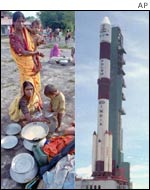
| | Thursday, 12 September, 2002, 16:14 GMT 17:14 UK Indian weather satellite blasts off 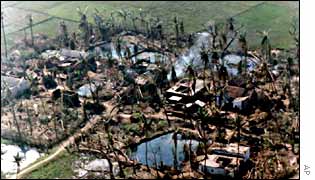 The satellite could help predict devastating cyclones India has successfully launched its first weather satellite which it hopes will help the country to predict cyclones and storms more accurately. The 1,000 kg satellite, known as Metsat, was launched from the Sriharikota launch pad near Madras by the Indian Space Research Organisation (ISRO). It was carried aboard India's Polar Satellite Launching Vehicle (PSLV) and will collect data about wind speed, air moisture and temperatures. Scientists hope it will help to forecast severe weather events such as cyclones and the kinds of storms which recently caused catastrophic floods in the country. Versatile Metsat is also intended as a precursor to widening the versatility of Indian satellites for weather, telecommunications and broadcasting.
Scientists in Bangalore said the launch was significant as it was the first time India was launching a satellite into an intermediate orbit known as the geostationary transfer orbit. The satellite will travel around the earth on an oval orbit which will be 250 km at its closest and 36,000 km at its furthest away. Powerful The launch vehicle is believed to have been made more powerful by using solid rocket fuel. Space research chief K Kasturirangan said Metsat was the first of the series of satellites to be launched into deep orbit using the PSLV. Metsat will be controlled from a facility at Hassan, 200 km from Bangalore. India has so far been using the PSLV to launch specialist satellites into orbit such as the Technology Experiment Satellite in October 2001. This satellite has been seen as a forerunner to the establishment of dedicated spy satellites by India. Metsat, which will provide high quality pictures and produce infrared and water vapour images, is expected to improve meteorological services in the country. India hopes to emerge as a major player in the lucrative satellite launching global market and, last year, successfully tested its first geostationary launch vehicle, which can launch bigger satellites into deep orbit. | | See also:  27 Nov 01 | South Asia 22 Oct 01 | South Asia 05 Jul 01 | South Asia Internet links: The BBC is not responsible for the content of external internet sites Top South Asia stories now: Links to more South Asia stories are at the foot of the page. | ||||||||||||||||||||||||||||||||||||||||||||||||||||||||||||||||||||||||||||||||||||||||||||||||||||||||||||||||||||||||||||||||||||||||||||||||||||||||||||||
| |
|  E-mail this story to a friend E-mail this story to a friend |
| |
| Links to more South Asia stories |
| | | ||
 | ||||
 | | Back to top
| ||
| ---------------------------------------------------------------------------------- To BBC Sport>> | To BBC Weather>> | To BBC World Service>> ---------------------------------------------------------------------------------- © MMIII | News Sources | Privacy |