|
 |
 | | | | | | ||||||||||||||||||||||||||||||||||||||||||||||||||||||||||||||||||||||||||||||||||||||||||||||||||||||||||||||||||||||||||||||||||||||||||||||||||||||||||||||||||||||||
| | | You are in: South Asia | ||||||||||||||||||||||||||||||||||||||||||||||||||||||||||||||||||||||||||||||||||||||||||||||||||||||||||||||||||||||||||||||||||||||||||||||||||||||||||||||||||||||||||
|
| | Monday, 19 August, 2002, 12:50 GMT 13:50 UK Pakistan denies al-Qaeda estimate 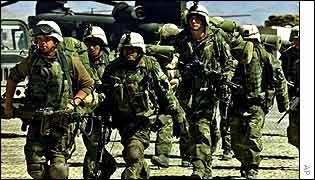 US troops in Afghanistan are searching for al-Qaeda remnants Pakistan has strongly rejected US military assessments that as many as 1,000 al-Qaeda fighters may be on its territory. "We don't think that putting an estimate of 1,000 could be anywhere near correct," Pakistan's military spokesman, General Rashid Qureshi, told the French news agency AFP. He was speaking after the American general heading the US-led campaign in Afghanistan, Dan McNeill, said that "hundreds, maybe even a thousand" al-Qaeda fighters were in Pakistan. General Quereshi refused to give his own estimate, adding that putting the numbers in the hundreds would be an exaggeration. General McNeill, also speaking to AFP, said that there were also "hundreds" of al-Qaeda members still in Afghanistan itself. Meanwhile, two US special forces soldiers were shot and wounded during an intelligence mission in southern Afghanistan. Searches According to General McNeill, efforts to wipe out al-Qaeda were being hampered as the coalition did not have the right to conduct combat missions in Pakistan. But General Qureshi accused the US forces of having failed to carry out thorough searches in Afghanistan's "very difficult terrain". "What he (McNeil) is basing his assessment on is the fact that the US forces have been unable to find al-Qaeda in Afghanistan. "It doesn't mean they are not there (in Afghanistan)..." he said.
Hundreds of al-Qaeda fighters are believed to have crossed the border into Pakistan since the US-led war to drive out the Taleban and its forces, began last year. Pakistan has been carrying out its own operations against the extremist fighters, using US intelligence. US officials believe that despite Pakistani President General Pervez Musharraf's support for US war on terrorism in Afghanistan, sympathy for al-Qaeda remained strong in tribal areas of Pakistan. US soldiers shot Meanwhile, two US special forces soldiers were shot and wounded during an intelligence gathering mission in southern Afghanistan. "One was shot in the calf and the other in the upper thigh," the US military spokesman at Bagram air base, Colonel Roger King, told the Reuters news agency. According to Colonel King, the wounded soldiers were initially taken to Bagram and after their condition stabilised, flown to Germany for further medical treatment. He did not reveal the names of the injured soldiers as their relatives were yet to be informed. Colonel King said four people were detained during the operation, but gave no more details. US forces are in Afghanistan pursuing remnants of the former Taleban regime and members of the al-Qaeda network. Nearly 40 American soldiers have been killed in combat and non-combat incidents and close to 350 have been injured since US-led operations in Afghanistan began last October. | |
See also:  27 Jul 02 | South Asia 21 Jul 02 | South Asia 12 Jul 02 | Asia-Pacific Internet links: The BBC is not responsible for the content of external internet sites Top South Asia stories now: Links to more South Asia stories are at the foot of the page. | ||||||||||||||||||||||||||||||||||||||||||||||||||||||||||||||||||||||||||||||||||||||||||||||||||||||||||||||||||||||||||||||||||||||||||||||||||||||||||||||||||||||||
| |
|  E-mail this story to a friend E-mail this story to a friend |
| |
| Links to more South Asia stories |
| | | ||
 | ||||
 | | Back to top
| ||
| ---------------------------------------------------------------------------------- To BBC Sport>> | To BBC Weather>> | To BBC World Service>> ---------------------------------------------------------------------------------- © MMIII | News Sources | Privacy |