|
 |
 | | | | | | ||||||||||||||||||||||||||||||||||||||||||||||||||||||||||||||||||||||||||||||||||||||||||||||||||||||||||||||||||||||||||||||||||||||||||||||||||||||||||||||||||||||||||||||||||||
| | | You are in: South Asia | ||||||||||||||||||||||||||||||||||||||||||||||||||||||||||||||||||||||||||||||||||||||||||||||||||||||||||||||||||||||||||||||||||||||||||||||||||||||||||||||||||||||||||||||||||||||
|
| | Sunday, 14 July, 2002, 15:58 GMT 16:58 UK Analysis: Kashmir war fears resurface 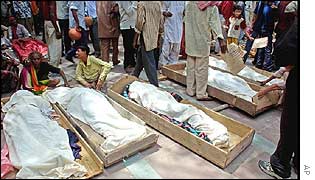 The death toll is expected to rise
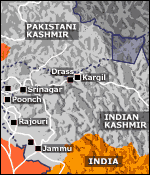
The Chief Minister of Indian-administered Kashmir, Farooq Abdullah, urged world leaders to act against Pakistan after suspected Muslim militants killed 27 labourers in a slum outside Jammu on Saturday night. Mr Abdullah said cross-border terrorism would not end on its own.
He said: "It will keep happening until the international community wakes up to this fact and unites to fight it by exerting pressure on Pakistan." Indian Deputy Prime Minister Lal Krishan Advani has made it clear that the official response will be in the form of a statement made in parliament on Monday. Analysts expect it to be a measured response, avoiding any strong language that might play into the hands of militant groups who want an India-Pakistan war and also want to disrupt state elections in October. Tension in Kashmir is expected to be further heightened when Hindu pilgrims trek to a cave shrine called Amarnath on 22 July. It is not yet known who carried out the attack, but Indian Foreign Minister Yashwant Sinha has blamed Pakistani-sponsored militants. Some people in Delhi believe that the two Pakistan-based militant groups - the Lashkar-e-Toiba and Jaish-e-Mohammad - could be behind the attack.
Only intense international pressure kept India and Pakistan from all-out war after an attack on an army camp near Jammu on 14 May left 32 people dead. Both countries still have troops massed along their international border and on the Line of Control in divided Kashmir. Relations remain aggressively hostile. India desisted from military action only after the US extracted a promise from Pakistani President Pervez Musharraf that he would not allow Islamic extremists to cross the border into Indian Kashmir. Since then, Indian ministers have given conflicting opinions on whether President Musharraf has kept his word. Defence Minister George Fernandes said recently that terrorist infiltration had "almost ended'. But Mr Sinha later said it was still going on and that Pakistan had done "nothing worthwhile to dismantle the infrastructure of terrorism". He also said that India would only talk to Pakistan when it had conclusive proof that infiltration had ended for good. US pressure Washington's view is that although there have been fewer cases of infiltration, it must be made permanent. State Department spokesman Richard Boucher said on Saturday that President Musharraf had made a commitment. "We all want to see that happen and [see] that this does remain a permanent change. Second, we want to see the continued action that he has talked about, like the action against training camps and groups." However, in an interview with Time magazine to be published in its 22 July issue, President Musharraf says that "as far as training camps are concerned, what is happening inside Pakistan is to be left to us to handle". Mr Boucher said the US also expected India to reciprocate by easing tensions. Indian anger Any such overtures are now unlikely in the wake of the latest tragedy. Junior Home Minister ID Swami said after the attack that he had discerned no change of heart in President Musharraf. "He has made it clear that he is not sincere, so we expect these sorts of attacks on soft targets to continue," he said. US Secretary of State Colin Powell is to visit Delhi and Islamabad later this month. The British Foreign Secretary, Jack Straw, is due in India on Friday as part of continuing diplomatic efforts to reduce tensions. A new session of the Indian parliament opens on Monday and the Qasim Nagar attack will inevitably dominate debate. | |
See also:  14 Jul 02 | South Asia 14 Jul 02 | South Asia 13 Jul 02 | South Asia 21 Jun 02 | South Asia 06 Jun 02 | South Asia Internet links: The BBC is not responsible for the content of external internet sites Top South Asia stories now: Links to more South Asia stories are at the foot of the page. | ||||||||||||||||||||||||||||||||||||||||||||||||||||||||||||||||||||||||||||||||||||||||||||||||||||||||||||||||||||||||||||||||||||||||||||||||||||||||||||||||||||||||||||||||||||
| |
|  E-mail this story to a friend E-mail this story to a friend |
| |
| Links to more South Asia stories |
| | | ||
 | ||||
 | | Back to top
| ||
| ---------------------------------------------------------------------------------- To BBC Sport>> | To BBC Weather>> | To BBC World Service>> ---------------------------------------------------------------------------------- © MMIII | News Sources | Privacy |