|
 |
 | | | | | | ||||||||||||||||||||||||||||||||||||||||||||||||||||||||||||||||||||||||||||||||||||||||||||||||||||||||||||||||||||||||||||||||||||||||||||||||||||||||||||||||||||||||||||||||||||||||
| | | You are in: South Asia | ||||||||||||||||||||||||||||||||||||||||||||||||||||||||||||||||||||||||||||||||||||||||||||||||||||||||||||||||||||||||||||||||||||||||||||||||||||||||||||||||||||||||||||||||||||||||||
|
| | Wednesday, 29 May, 2002, 01:02 GMT 02:02 UK Analysis: South Asia's nuclear brinksmanship  Pakistan is 'more likely to strike first'
With more than a million troops poised along the Line of Control in Jammu and Kashmir, India and Pakistan stand on the brink of a war which could quickly escalate into a nuclear conflict. The scale of the Indian mobilisation is meant to serve two main purposes.
The second aim is to challenge in a decisive way Pakistan's deterrence calculations. Since the Kargil crisis of 1999 in which more than 1,000 troops, including many Pakistani regulars, crossed into Indian-controlled Jammu and Kashmir, India has argued that Pakistan has been willing to escalate low-level military operations across the Line of Control, confident that its nuclear weapons will deter India from a substantial military response. It is in part in order to disabuse Pakistan of this belief that India is now in the final stages of building up conventional forces for the "decisive victory" of which Indian Prime Minister Vajpayee recently spoke. This is also the main reason why it is going to be extremely difficult for India to turn away from its present course. Going to war General Musharraf's defiant rhetoric in his national broadcast on 27 May appears to rule out substantive concessions to India and, notwithstanding British, EU and US diplomatic missions to the region, the situation is spiralling towards war.
The progress of Indian military preparations, the timing of international diplomatic efforts, and the likelihood of snows in Jammu and Kashmir from late September point to a narrowing window of military opportunity for India in the summer. If a conventional conflict on anything other than a very small scale takes place, there are a number of entirely plausible pathways that could lead to nuclear war. India has declared a no first-use nuclear policy, has conventional military superiority, and strategic space for retreat in the event Pakistan made territorial gains into India. Pakistan has none of these luxuries and indeed has been quite open in articulating a nuclear first-use strategy intended to address its conventional weakness. Most commentators expect that if nuclear weapons are used, it is Pakistan which will first cross the nuclear Rubicon. Catalysts In February of this year, General Khalid Kidwai, Chief of Pakistan's Strategic Plans Division tasked with the control of nuclear weapons, outlined four scenarios which would imperil the nation and could therefore lead to the use of nuclear weapons by Pakistan:
It is entirely possible that a major military move by India across the Line of Control could quickly lead to the first three of these scenarios, any one of which could trigger nuclear war. Even allowing that Pakistan, in the final analysis, would not use nuclear weapons as a deliberate instrument of policy, there are still at least three other routes to nuclear war - in descending order of probability - which arise because the systems to assure the safety, security and control of nuclear weapons in the context of an ongoing conflict are not yet fully in place. The first is that the control of one or more nuclear weapons may be delegated to a regional commander whose forces then become subject to conventional attack or to misperception. Such a commander, under time pressure and fearing the loss of his nuclear weapons, may decide to use them without high-level authority rather than risk them being captured or destroyed. It is worth noting that there are reliable reports of both India and Pakistan training for conventional air strikes and commando raids against the nuclear weapons sites of the other.
The second is that nuclear weapons may fall into the hands of one or a group of unstable military (or conceivably non-military) personnel who may use the weapon(s) for motives of religious fervour or as a result of psychological, drug, or other problems. The third is that nuclear weapons may be dropped or launched by accident as a result of technical or human error. It is impossible to quantify these risks, but past evidence within and outside the region suggests all scenarios are entirely possible. Constant communication This does not mean that nuclear war is consequently inevitable. It is often overlooked that India and Pakistan have a track record of managing potentially nuclear crises - Brasstacks in 1986-7; Zarb-i-Momin in 1990 and Kargil in 1999 - and that they have in place a number of arms control measures to stabilise nuclear competition. Both sides have also been able to learn from the Cold War experience, and have highly disciplined and well-trained military personnel in nuclear weapons roles. Moreover, considerable bilateral dialogue at many levels continues behind the scenes even at the height of rhetorical hostility. Much has been made of the absence of a "hotline" allowing General Musharraf and Prime Minister Vajpayee to communicate directly. In fact, bilateral communications of this kind are readily available and were indeed used during the 1999 Kargil crisis when Mr Vajpayee spoke with Narwaz Sharif, then Pakistan's leader. That said, the present crisis is undoubtedly the most serious the two nations have faced since the 1971 war and even with major international diplomatic input it will still be extremely difficult to find a face-saving formula to allow the protagonists to disengage. If war does break out, the possibility of nuclear escalation puts millions of lives at risk and perhaps even the existence of the states themselves. That dreadful prospect may yet be enough to forestall a war and persuade Indian and Pakistan to find better ways to tackle their differences - much as the United States and Soviet Union were forced to do in the aftermath of the 1962 Cuban missile crisis. Dr Shaun Gregory is reader in international security at the University of Bradford and has been researching the risks of nuclear war between India and Pakistan in Islamabad and Delhi for the last three years. | |
See also:  28 May 02 | South Asia 23 May 02 | South Asia 27 May 02 | South Asia Internet links: The BBC is not responsible for the content of external internet sites Top South Asia stories now: Links to more South Asia stories are at the foot of the page. | ||||||||||||||||||||||||||||||||||||||||||||||||||||||||||||||||||||||||||||||||||||||||||||||||||||||||||||||||||||||||||||||||||||||||||||||||||||||||||||||||||||||||||||||||||||||||
 | |
|  E-mail this story to a friend E-mail this story to a friend |
| |
| Links to more South Asia stories |
| | | ||
 | ||||
 | | Back to top
| ||
| ---------------------------------------------------------------------------------- To BBC Sport>> | To BBC Weather>> | To BBC World Service>> ---------------------------------------------------------------------------------- © MMIII | News Sources | Privacy |






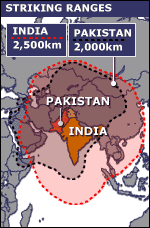
 Most commentators expect that if nuclear weapons are used, it is Pakistan which will first cross the nuclear Rubicon