|
 |
 | | | | | | |||||||||||||||||||||||||||||||||||||||||||||||||||||||||||||||||||||||||||||||||||||||||||||||||||||||||||||||||||||||||||||||||||||||||||||||
| | | You are in: Science/Nature | |||||||||||||||||||||||||||||||||||||||||||||||||||||||||||||||||||||||||||||||||||||||||||||||||||||||||||||||||||||||||||||||||||||||||||||||||
|
| | Monday, 10 February, 2003, 11:17 GMT World 'needs green Geneva Convention'  Kuwait oilfields: Used as a weapon of war
The environment is often neglected as "the long-term casualty of war", he argues. Similarly, struggles over natural resources like water are frequently the reason why conflicts begin. So protecting the environment, and "putting poverty to the sword", are the best ways of protecting the peace.
In an article written to mark the meeting here of Unep's governing council, Dr Toepfer says cleaning up wars' environmental impact is far harder than sanitising the language of war. "It is the loss of human life, the suffering of those made homeless and hungry, who must be our first concern", he writes. "But all too often the impact on the Earth's life-support systems is ignored� at our peril, as the growing expertise of Unep's Post-Conflict Assessment Unit is suggesting." Environmental security The unit has assessed the environmental damage of the conflicts in the Balkans and Afghanistan. It has now been mandated by the governing council to act as an intermediary between the Israelis and the Palestinians in tackling environmental problems in the West Bank and Gaza Strip. Dr Toepfer said environmental security had to be a fundamental part of a long-lasting peace policy.
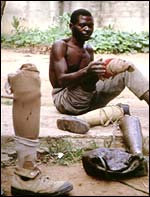
Landmines in former conflict areas like Afghanistan, Cambodia, Bosnia and parts of Africa were "horrific hazards for people". And they placed productive land out of bounds, forcing people to clear forests and other sensitive areas. Refugee movements could take a heavy toll: Angola's national parks and reserves now had only 10% of their original wildlife. Sustainable development Dr Toepfer, a former German environment minister, was born shortly before the second world war. In a telling passage, he wrote: "Warfare may be justified when all avenues of diplomacy have been exhausted. The struggle to rid Europe and the world of the insanity of fascism, culminating in war, was vital. "Evil must be confronted at all costs." He said many conflicts were fuelled by greed for natural resources: Angola's Unita rebels were estimated to have made more than $4bn from diamonds between 1992 and 2001. Every day 6,000 people, mainly children, died from poor sanitation or the want of clean water - a rate comparable to the death of a quarter of London's population every year. But countering these various threats was sustainable development in action. "We have an alliance against terrorism", Dr Toepfer said. "We need an alliance against poverty, and solidarity with the marginalised. "Putting poverty to the sword is the peace policy of the 21st Century." But we had to go further, he said, and outlaw those who deliberately put the environment at risk in war. "We have the Geneva Conventions, aimed at safeguarding the rights of prisoners and civilians. We need similar safeguards for the environment. "Using the environment as a weapon must be universally condemned, and denounced as an international crime against humankind, against Nature." | | See also:  07 Feb 03 | Science/Nature 07 Feb 03 | Science/Nature 29 Jan 03 | Science/Nature 23 Jan 03 | Science/Nature 13 Mar 01 | Middle East 14 Sep 02 | Middle East Internet links: The BBC is not responsible for the content of external internet sites Top Science/Nature stories now: Links to more Science/Nature stories are at the foot of the page. | |||||||||||||||||||||||||||||||||||||||||||||||||||||||||||||||||||||||||||||||||||||||||||||||||||||||||||||||||||||||||||||||||||||||||||||||
 | |
|  E-mail this story to a friend E-mail this story to a friend |
| |
| Links to more Science/Nature stories |
| | | ||
 | ||||
 | | Back to top
| ||
| ---------------------------------------------------------------------------------- To BBC Sport>> | To BBC Weather>> | To BBC World Service>> ---------------------------------------------------------------------------------- © MMIII | News Sources | Privacy |






 We need an alliance against poverty, and solidarity with the marginalised