|
 |
 | | | | | | ||||||||||||||||||||||||||||||||||||||||||||||||||||||||||||||||||||||||||||||||||||||||||||||||||||||||||||||||||||||||||||||||||||||||||||||||
| | | You are in: Science/Nature | ||||||||||||||||||||||||||||||||||||||||||||||||||||||||||||||||||||||||||||||||||||||||||||||||||||||||||||||||||||||||||||||||||||||||||||||||||
|
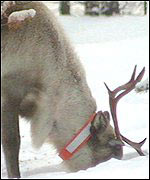
| | Monday, 23 December, 2002, 14:10 GMT Reindeer climate threat  Ice stops them getting at lichen and mosses
Rain falling on snow is creating ice that restricts their food supply, says a US team. Rainfall in the northern latitudes where the animals live has been increasing in recent years.
The problem is caused by rain falling on snow in the far northern latitudes during winter. The water seeps into the soil and freezes, producing a coating of ice. The ice layer stops hoofed animals such as reindeer, caribou and musk ox from getting to the lichens and mosses they eat. Ice layer According to study author, Jaakko Putkonen, it is a growing problem in far north places such as the Norwegian island of Spitsbergen, midway between Norway and the North Pole.
"I have seen soil temperatures remain at the freezing point for as long as two months because of the slowly freezing water below the thick snow pack. "Even when ice layers are not impenetrable, the warmer soil surface temperatures promote the growth of fungi and toxic moulds among the lichens, so the animals avoid those areas." Dr Putkonen's team constructed a model of snow and soil heat generation to study the effects of climate change in areas such as northern Alaska and Canada, Greenland, northern Scandinavia, and Russia. Future threat The model predicts that by 2089, the land mass affected by rain falling on snow will have risen by 40%. "The bottom line is that the rain will penetrate farther into the interiors of the continents, where most of the reindeer are," says Dr Putkonen.
Another concern is that they may damage their hooves pawing at the ice. Lynn Rosentrater, climate scientist in the WWF International Arctic Programme, says reindeer will end up starving or will have to migrate in search of other food sources. "This will be the future environment for reindeer - it's a very frightening prospect," she told BBC News Online. The WWF says it is very concerned about the reindeer's future with respect to climate change and other threats. But Dr Rosentrater says reindeer populations in the Arctic are stable at the moment. "I don't want to scare anyone - Santa's presents will arrive on time this year," she joked. The University of Washington team is calling for a more in-depth study of how hoofed animals in northern areas are affected by global climate change. Their research will be published in the journal Geophysical Research Letters. Main image: Jaakko Putkonen. | | See also:  14 Dec 02 | England 20 Nov 02 | Technology 24 Dec 00 | Europe 03 Feb 00 | Europe Internet links: The BBC is not responsible for the content of external internet sites Top Science/Nature stories now: Links to more Science/Nature stories are at the foot of the page. | ||||||||||||||||||||||||||||||||||||||||||||||||||||||||||||||||||||||||||||||||||||||||||||||||||||||||||||||||||||||||||||||||||||||||||||||||
 | |
|  E-mail this story to a friend E-mail this story to a friend |
| |
| Links to more Science/Nature stories |
| | | ||
 | ||||
 | | Back to top
| ||
| ---------------------------------------------------------------------------------- To BBC Sport>> | To BBC Weather>> | To BBC World Service>> ---------------------------------------------------------------------------------- © MMIII | News Sources | Privacy |






 You have an ice layer at the surface several centimetres thick that even a person couldn't get through without tools