|
 |
 | | | | | | |||||||||||||||||||||||||||||||||||||||||||||||||||||||||||||||||||||||||||||||||||||||||||||||||||||||||||||||||||||||||||||||||||||||||||||||||
| | | You are in: Science/Nature | |||||||||||||||||||||||||||||||||||||||||||||||||||||||||||||||||||||||||||||||||||||||||||||||||||||||||||||||||||||||||||||||||||||||||||||||||||
|
| | Friday, 13 December, 2002, 12:11 GMT Revving up the rovers 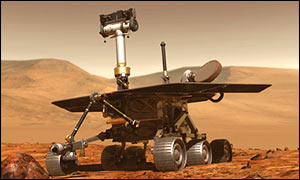 The rovers intend to cover a lot of ground
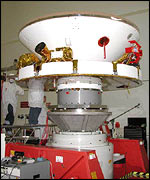
Now comes the deep-freeze space simulator. "We fill it with nitrogen to simulate the Martian atmosphere and cool it to Martian temperatures," said Steven Squyres, the principal investigator for the US space agency's (Nasa) Mars Exploration Rover (MER) Mission. "Then we make the rover do all it's supposed to do," such as unfold itself, roll and extend its robotic arm. With launch dates just six months away, Nasa's science team is making final preparations to send two rovers into space in an effort to understand the past environment of Mars. Landing decision The twin robots, each with a suite of sophisticated computers, cameras and telecommunications equipment, are decked out like field geologists to explore the Red Planet.
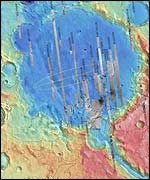
As all life depends on water, finding life-friendly habitats means looking for traces of water in the Martian minerals and rocks. Choosing water friendly areas on Mars is the topic of the upcoming - and nearly the last - workshop designed to select landing sites for the two rovers. Next month, nearly 100 scientists will gather in Pasadena to weigh the merits of a list narrowed to four. Lessons learned The finalists were chosen after scientists eliminated high-elevation areas with atmosphere insufficient to slow a parachute, and ruled out latitudes without enough sunshine to power the rovers' solar panels.
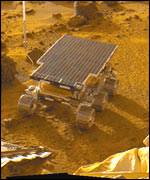
"We want a site near areas favourable to the preservation of evidence of biological processes," said Matthew Golombeck, Mars program landing site scientist at the Jet Propulsion Laboratory (JPL). But in the end, "a safe landing is key". It has been five years since MER's predecessor landed on Mars. The Pathfinder mission was important in validating the technology - in particular the landing techniques and the operation of a roving robot. The success paved the way for MER's advanced field mission. Martian tortoise "This is a big, big leap from Pathfinder," said Dr Squyres. While Sojourner depended on the scientific equipment in its lander, the rovers carry all the instruments with them. Once the rover lands and unfolds itself, the landing pod is left as "scrap metal," said Mark Adler, MER mission manager
Once the lander opens, the rover unfolds itself in a "trick of reverse origami," according to Dr Adler. Then the robot is off and running - sort of. "Pedal to the metal, it covers 5-6 centimetres a second," said Dr Squyres, who likened it to the velocity of a Galapagos tortoise. Yet the twin rovers will cover more ground in a day - 100 meters - than Sojourner did in its entire mission. And the rovers are designed with autonomous capabilities. Once Earth transmits their daily assignments, they fulfil them on their own. Web posting Nasa has designed rovers that can thread their way through a Martian obstacle course. "The rover looks at the terrain ahead of it. If it's flat, it drives forward," said Dr Squyres. "If it sees a big scary rock, it will stop and turn." Once the rover reaches its target, the rock abrasion tool, or Rat, will be used to expose fresh rock for analysis. Then the cameras will zoom in. One pair of the nine on board has sharper visual acuity than the human eye - the resulting images will have more than three times the resolution of anything yet seen on the planet. "You'll see a view of Mars fundamentally different from anything you've seen before," said Dr Squyres. The first rover launch is scheduled for 30 May with an arrival date of 4 January, 2004. Rover 2 will follow a month later. By then, they will have proper names - from contest entries submitted by children. And public participation will continue after the landing. Nasa says it plans to post as much real-time data on the web as possible. | | See also:  11 Dec 02 | Science/Nature 09 Dec 02 | Science/Nature 23 Aug 02 | Science/Nature 10 Aug 00 | Science/Nature 23 Jun 00 | Science/Nature Internet links: The BBC is not responsible for the content of external internet sites Top Science/Nature stories now: Links to more Science/Nature stories are at the foot of the page. | |||||||||||||||||||||||||||||||||||||||||||||||||||||||||||||||||||||||||||||||||||||||||||||||||||||||||||||||||||||||||||||||||||||||||||||||||
| |
|  E-mail this story to a friend E-mail this story to a friend |
| |
| Links to more Science/Nature stories |
| | | ||
 | ||||
 | | Back to top
| ||
| ---------------------------------------------------------------------------------- To BBC Sport>> | To BBC Weather>> | To BBC World Service>> ---------------------------------------------------------------------------------- © MMIII | News Sources | Privacy |






 You'll see a view of Mars fundamentally different from anything you've seen before