|
 |
 | | | | | | |||||||||||||||||||||||||||||||||||||||||||||||||||||||||||||||||||||||||||||||||||||||||||||||||||||||||||||||||||||||||||||||||||||||
| | | You are in: Science/Nature | |||||||||||||||||||||||||||||||||||||||||||||||||||||||||||||||||||||||||||||||||||||||||||||||||||||||||||||||||||||||||||||||||||||||||
|
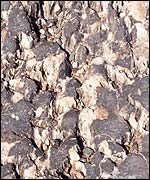
| | Thursday, 5 December, 2002, 13:45 GMT World's 'oldest' volcanic rocks 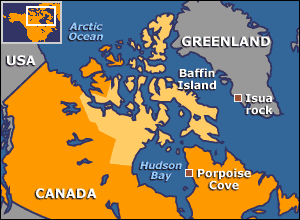 The oldest volcanic rocks in the world have been discovered by geologists in Canada.
By studying the rocks the scientists hope to find out more about how life began on Earth. And by comparing these rocks with similar ones found in Greenland, the researchers can learn more about the first billion years of the planet's evolution. The rocks lie in Porpoise Cove on the shores of Hudson Bay. They were found almost by chance. Surprise find At first, the geologists thought the rocks were only about 2.8 billion years old. But more detailed analysis showed they were at least a billion years older. Samples were taken back to the University of Quebec in Montreal and the Simon Fraser University in British Columbia for precise dating. This was done by Pierre Nadeau and Dr Jean David. By calculating the radioactive decay in the rocks' minerals, the scientists estimated their samples to be 3.825 billion years old - give or take 16 million years. Co-researcher Professor Ross Stevenson from the University of Quebec told BBC News Online it was a find that surprised all the scientists. "Finding these rocks is like having a jewel dropped in my lap," he said How life began The Canadian rocks were formed from magma that came from the Earth's mantle. They will therefore hold clues to the first quarter of the Earth's history.
This was then followed by the formation of the oceans and simple lifeforms, such as bacteria. And so far, scientists know very little about how it all happened. But the rocks just discovered are very similar to others from the so-called Isua sequence in Greenland. Little preserved Much research has already been carried out on these basaltic rocks, and scientists believe they may have found carbon compounds in them that were produced by biological activity. The Canadian and Greenland rocks can now be looked at together. Professor Stevenson said: "These rocks give us a comparison that wasn't there before." Dr Rosalind White from the University of Leicester, UK, has been studying the Greenland rocks for some time. She said: "Until this recent work, the rocks in Isua had been considered to be unique, but the 35 kilometre long sequence only represents a snapshot of a small area, so it has been difficult to reach conclusions about the whole planet." Commenting on the new rocks, she said they would help geologists get a much better picture of the Earth's early evolution. The Porpoise Cove rocks were recovered as part of a mapping project carried out under the direction of Martin Parent from the Ministry of Natural Resources of Quebec. | | See also:  08 Jul 02 | Science/Nature 06 Jun 02 | Science/Nature 12 Jul 00 | Science/Nature 05 Oct 00 | Science/Nature Internet links: The BBC is not responsible for the content of external internet sites Top Science/Nature stories now: Links to more Science/Nature stories are at the foot of the page. | |||||||||||||||||||||||||||||||||||||||||||||||||||||||||||||||||||||||||||||||||||||||||||||||||||||||||||||||||||||||||||||||||||||||
| |
|  E-mail this story to a friend E-mail this story to a friend |
| |
| Links to more Science/Nature stories |
| | | ||
 | ||||
 | | Back to top
| ||
| ---------------------------------------------------------------------------------- To BBC Sport>> | To BBC Weather>> | To BBC World Service>> ---------------------------------------------------------------------------------- © MMIII | News Sources | Privacy |