|
 |
 | | | | | | |||||||||||||||||||||||||||||||||||||||||||||||||||||||||||||||||||||||||||||||||||||||||||||||||||||||||||||||||||||||||||||||||||||||||||||||
| | | You are in: Science/Nature | |||||||||||||||||||||||||||||||||||||||||||||||||||||||||||||||||||||||||||||||||||||||||||||||||||||||||||||||||||||||||||||||||||||||||||||||||
|
| | Tuesday, 26 November, 2002, 15:51 GMT Pesticide cuts 'must be obligatory' 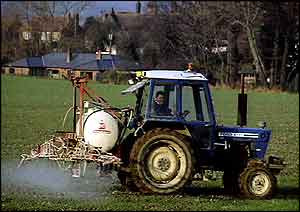 Farmers' chemical use is falling, but still prompts concern
It says the government's voluntary initiative should be only one part of a wide-ranging strategy to cut agrochemical use. It says farmers would respond to financial measures, which it urges the government to prepare. Environmental campaigners say the government should commit itself to introducing a tax on pesticides. In its report, the House of Commons Environmental Audit Committee (EAC) says the voluntary initiative "has got off to a rather slow start". The report says: "It has so far had little impact on farmers as much of the work done to date has involved preparation and groundwork... The next year will be critical." But it expresses concern that the initiative does not offer farmers enough incentives to support it, and cannot require them to behave differently. Appeal to conscience It says there is little emphasis on cutting pesticide use and encouraging alternative approaches. The committee's chairman, John Horam MP, said: "We have grave reservations on whether the Initiative can actually deliver.
The initiative includes 27 distinct projects on pesticide use and represents a commitment by the agrochemicals industry and farming unions to cut the environmental impacts of pesticides. Nearly three years ago the EAC looked at proposals for introducing a pesticides tax, but the initiative was the alternative the government chose. The committee says the initiative does need to be given more time, and should be thoroughly reviewed in a year's time. But in any case, it says, the initiative should be just one aspect of a more comprehensive strategy on reducing pollution from pesticides. Removing them from the water supply costs hundreds of millions of pounds annually. Joining up government Mr Horam said: "It is not enough for the government to rely on a single policy instrument, such as the voluntary initiative, to deliver an environmental objective. "Many other bodies, such as the Advisory Committee on Pesticides, the Pesticides Forum, and Defra [the Department for Environment, Food and Rural Affairs] itself are involved in determining overall policy in this area.
The report urges Defra and the Treasury to research the use of fiscal instruments, and to prepare to introduce them. It says they could provide rebates to farmers who followed stricter environmental guidance, and could also be used to discriminate against the most damaging chemicals. 'Doing their best' Sandra Bell of environmental group Friends of the Earth said: "It is clear that the voluntary initiative is not working. "It is time the government looked to a pesticide tax to have a real impact on cutting pesticide pollution. But the money raised must be used to support British farmers in finding safe alternatives to chemical pesticides." The National Farmers' Union said: "Farmers are acutely aware of the need to use crop protection measures sparingly - they are an expensive commodity - and between 1990 and 2000 their use in agriculture fell by 23% in Britain." The Organisation for Economic Cooperation and Development says: "Over the 1990s, UK farmers reduced pesticide consumption by 14% (in tonnes of active ingredients). The intensity of pesticide use remains high by OECD standards, however." | | See also:  25 Sep 02 | Health 07 Aug 02 | Health 07 Aug 02 | Health 08 Jul 02 | Health Internet links: The BBC is not responsible for the content of external internet sites Top Science/Nature stories now: Links to more Science/Nature stories are at the foot of the page. | |||||||||||||||||||||||||||||||||||||||||||||||||||||||||||||||||||||||||||||||||||||||||||||||||||||||||||||||||||||||||||||||||||||||||||||||
| |
|  E-mail this story to a friend E-mail this story to a friend |
| |
| Links to more Science/Nature stories |
| | | ||
 | ||||
 | | Back to top
| ||
| ---------------------------------------------------------------------------------- To BBC Sport>> | To BBC Weather>> | To BBC World Service>> ---------------------------------------------------------------------------------- © MMIII | News Sources | Privacy |