
|
 |
 | | | | | | |||||||||||||||||||||||||||||||||||||||||||||||||||||||||||||||||||||||||||||||||||||||||||||||||||||||||||||||||||||||||||||||||||||||||
| | | You are in: Science/Nature | |||||||||||||||||||||||||||||||||||||||||||||||||||||||||||||||||||||||||||||||||||||||||||||||||||||||||||||||||||||||||||||||||||||||||||
|
| | Tuesday, 26 November, 2002, 09:32 GMT New ape population found 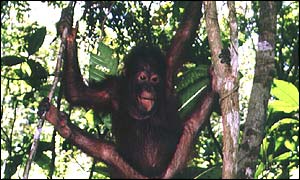 The largest tree-living mammal A secret population of orang-utans has been discovered in the forests of the island of Borneo. Conservationists believe about 2,000 rare apes are living out of sight in a remote lowland region of East Kalimantan. The find, if confirmed, will raise the number of known orang-utans in the world by about 10%.
The claim, by researchers from the US-based conservation group Nature Conservancy, is based on signs of nests made by the apes. A survey of forest terrain suggests between 1,000 and 2,500 orang-utans are living in the area unnoticed, until now. "This group could be one of the three largest populations in the world," said Linda Engstrom on the group's website. Engstrom, and colleague Bhayu Pamungk, spent four months searching dense areas of forest with teams of local villagers they had trained. Logging threat Orang-utans, like gorillas and chimpanzees, are often described as the closest relatives of humans. They are in grave danger of extinction, because their habitat is under threat from illegal logging, forest fires and gold mining.
An estimated 9,000 orang-utans survive in northern Sumatra, mainly near one national park, while some 10,000 to 15,000 orang-utans remain in Borneo. Primate experts have predicted that the apes will be found only in zoos by the year 2020 unless immediate steps are taken to protect them. According to a report by the United Nations Environment Programme (Unep), the annual 5% loss of habitat means there will be virtually no intact forest left for them by 2030.
"The discovery of a large, biologically viable, previously unsurveyed orang-utan population in East Kalimantan is very significant," said scientist and conservationist Dr Birute Galdikas, the president of the foundation. "This find extends the orang-utan's known range and gives us hope that we can save orang-utan populations from extinction in the wild." | | See also:  19 Apr 98 | Haze 98 15 Apr 98 | Asia-Pacific 17 Sep 02 | Africa Internet links: The BBC is not responsible for the content of external internet sites Top Science/Nature stories now: Links to more Science/Nature stories are at the foot of the page. | |||||||||||||||||||||||||||||||||||||||||||||||||||||||||||||||||||||||||||||||||||||||||||||||||||||||||||||||||||||||||||||||||||||||||
| |
|  E-mail this story to a friend E-mail this story to a friend |
| |
| Links to more Science/Nature stories |
| | | ||
 | ||||
 | | Back to top
| ||
| ---------------------------------------------------------------------------------- To BBC Sport>> | To BBC Weather>> | To BBC World Service>> ---------------------------------------------------------------------------------- © MMIII | News Sources | Privacy |






