|
 |
 | | | | | | ||||||||||||||||||||||||||||||||||||||||||||||||||||||||||||||||||||||||||||||||||||||||||||||||||||||||||||||||||||||||||||||||||||||||||
| | | You are in: Science/Nature | ||||||||||||||||||||||||||||||||||||||||||||||||||||||||||||||||||||||||||||||||||||||||||||||||||||||||||||||||||||||||||||||||||||||||||||
|
| | Monday, 18 November, 2002, 14:37 GMT Secrets of a winning design 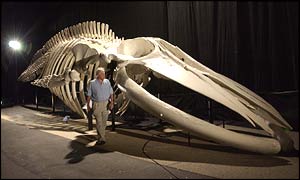 The closest most people get to a blue whale One of the reasons David Attenborough's natural history programmes continue to astound the viewer is because they keep coming up with extraordinary pictures. Just when you think you have seen the entire world on your multi-channel TV, along comes Sir David with something new - something different.
And this is especially true of many of the creatures featured in his latest series, The Life Of Mammals, because they are nocturnal. The programmes are indebted to some very clever low-light and infra-red photography. One of the most remarkable sequences takes place inside a platypus burrow as a mother cares for its new-born. Satellite tracking "We put a radio tag, a little collar, on one of the platypuses," Sir David explains. "That sends a signal that goes through the earth, so we could follow its beep along a tunnel and up a bank, and then it suddenly stopped and we knew that's where her burrow was.
The result is extraordinary footage never caught on camera before. It is a sequence Sir David first tried to get 20 years previously in Life On Earth. "There are things you can do now you couldn't dream of doing two decades ago," he says. One of the film-maker's favourite moments in the new series comes when he pilots a small boat within metres of the tail fin of a blue whale. The biggest mammal of them all is a solitary animal and you cannot just tip up in a boat to film it like penguins in a zoo.
"You can plot their movements and with that information you can whiz off in a launch and catch up with one of them." 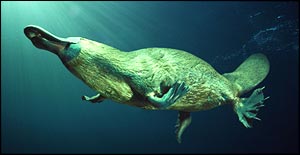 The duck-billed platypus: A mammal that lays an egg The �8m series aims to explain why the 4,000 or so mammal species have become so pervasive. With bodies kept warm by thick coats of fur and their developing young protected and nourished by their bodies, these animals have managed to colonise every part of the globe. The series is a gallery of the beautiful and the bizarre and it is topped off by the most extraordinary animal to have ever walked across the Earth - us.
Sir David continues: "It's only five million years since a relative of the apes stood upright on the plains of Africa, a very brief episode in the three thousand million year history of life on this planet. "In that short time, one exceptional species of mammal - ourselves - has overrun the Earth. Yet we are still part of a complex network of animals and plants that brought us into existence. "In one way, however, we differ from any other species that has ever existed. For the first time, our unique species has the continued survival of all others in its hands." The Life Of Mammals is broadcast in the UK on BBC One, starting on Wednesday, 20 November, at 2100 GMT, and repeated on Sunday afternoons. | | See also:  09 Sep 02 | Leicester 2002 11 Sep 01 | Entertainment 21 Aug 02 | Entertainment Internet links: The BBC is not responsible for the content of external internet sites Top Science/Nature stories now: Links to more Science/Nature stories are at the foot of the page. | ||||||||||||||||||||||||||||||||||||||||||||||||||||||||||||||||||||||||||||||||||||||||||||||||||||||||||||||||||||||||||||||||||||||||||
| |
|  E-mail this story to a friend E-mail this story to a friend |
| |
| Links to more Science/Nature stories |
| | | ||
 | ||||
 | | Back to top
| ||
| ---------------------------------------------------------------------------------- To BBC Sport>> | To BBC Weather>> | To BBC World Service>> ---------------------------------------------------------------------------------- © MMIII | News Sources | Privacy |