|
 |
 | | | | | | |||||||||||||||||||||||||||||||||||||||||||||||||||||||||||||||||||||||||||||||||||||||||||||||||||||||||||||||||||||||||||||||||||||||||||||||||||||||||||||||||||||||||||||||||
| | | You are in: Science/Nature | |||||||||||||||||||||||||||||||||||||||||||||||||||||||||||||||||||||||||||||||||||||||||||||||||||||||||||||||||||||||||||||||||||||||||||||||||||||||||||||||||||||||||||||||||||
|
| | Friday, 8 November, 2002, 00:00 GMT Darwin's finches at risk  The finches hold a unique place in the history of science
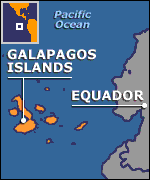
The flies were accidentally introduced to the islands, off Ecuador, and it is not known whether the finches will be able to cope with their arrival. Ornithologists have already noticed a higher death rate among juvenile birds living in infested nests and fear the losses may push some species to extinction. BirdLife International, a global alliance of bird organisations, has this week written to the Ecuadorian Government, alerting it to the issue and asking that further research be given a priority. Combination of factors The finches hold a unique place in the history of science. The birds, which live only on the Galapagos, were studied closely by Charles Darwin on his Beagle voyage in the 1830s. Observations on the shapes of the birds' beaks were central in helping Darwin formulate his theory of evolution. Concern about the finches' current status has been raised by Drs Birgit Fessl and Sabine Tebbich, of the Konrad Lorenz Institute, Austria.
Dr Fessl told BBC News Online: "This is a very big problem. If it was just the parasites, maybe the birds could cope. But there is a combination of factors including losses because of very dry years in the Galapagos and predation of nests by rats. "With all the factors taken together, some species could be eradicated quite easily." She says further study of the scale of the threat is urgently required. Serious candidate The fly larvae hide in the nest bedding during the day and come out at night to suck on the blood of the young birds and in some cases burrow deep into their bodies and even their brains. A host that has evolved in a long-term and close relationship with a parasite may experience degraded health but often will not die as a result of the infection. However, because Darwin's finches have only recently encountered the new parasites, the fear is their health may be fatally compromised.
"This is the really serious candidate for extinction among the Darwin finches because it has a known population of 110 individuals - an incredibly low number," he told BBC News Online. "But we just simply don't know if they are affected at the moment - the new research did not look at them - and that's why it's very important that we continue to monitor the situation." Dr Fessl said further study would be needed to check the Mangrove Finches but added there was no reason to believe they were not affected. "The parasites are not species specific," she said. Sterilised nests At least three types of parasitic fly are thought to have been accidentally introduced to the Galapagos, the first having been found in 1997. Scientists are not sure, but they think the insects may have arrived from the American mainland in an airplane or on a ship. The Austrian research, published in the latest issue of an ornithological journal, Ibis, sought some up-to-date data on the scale of the parasite problem facing native Galapagos birds. It gathered evidence of high infestation rates. On the island of Santa Cruz, Drs Fessl and Tebbich found that 97% of the endemic finch nests they looked at were affected by the parasite Philornis downsi. Each juvenile bird had an average of more than 23 parasites on it, and more than a quarter of these nestlings were dying - apparently as a result of infection. Dr Fessl said it might be possible in the case of the Mangrove Finches to sterilise their nests. "You would have to treat them in the early nesting phase. You put the chicks out for a couple of minutes and then disinfect the nest with an insecticide. "We did a little study and it worked very well. It reduced the parasite load in the nest by 80-90%. It's a lot of work but with the Mangrove Finches, it is feasible." | |
See also:  06 Nov 02 | Health 24 Sep 02 | Science/Nature 27 Aug 02 | Science/Nature 22 Jan 01 | Americas Internet links: The BBC is not responsible for the content of external internet sites Top Science/Nature stories now: Links to more Science/Nature stories are at the foot of the page. | |||||||||||||||||||||||||||||||||||||||||||||||||||||||||||||||||||||||||||||||||||||||||||||||||||||||||||||||||||||||||||||||||||||||||||||||||||||||||||||||||||||||||||||||||
|  |
|  E-mail this story to a friend E-mail this story to a friend |
 | |
| Links to more Science/Nature stories |
| | | ||
 | ||||
 | | Back to top
| ||
| ---------------------------------------------------------------------------------- To BBC Sport>> | To BBC Weather>> | To BBC World Service>> ---------------------------------------------------------------------------------- © MMIII | News Sources | Privacy |






 Some species could be eradicated quite easily