|
 |
 | | | | | | |||||||||||||||||||||||||||||||||||||||||||||||||||||||||||||||||||||||||||||||||||||||||||||||||||||||||||||||||||||||||||||||||||||||||||||||||||||||||||||||||||||||
| | | You are in: Science/Nature | |||||||||||||||||||||||||||||||||||||||||||||||||||||||||||||||||||||||||||||||||||||||||||||||||||||||||||||||||||||||||||||||||||||||||||||||||||||||||||||||||||||||||
|
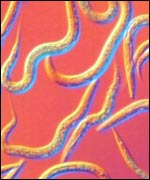
| | Thursday, 24 October, 2002, 16:14 GMT 17:14 UK Nobel scientist's bid for freedom 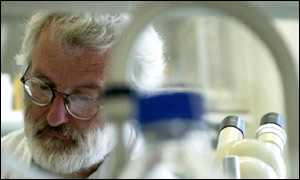 Sir John champions public benefit over private gain Nobel-Prize-winning scientist Sir John Sulston has spent some 30 years in a laboratory studying a millimetre-long worm in an attempt to help us understand our own bodies. At the cutting edge of scientific research he also led the UK race to sequence the human genome, where he found himself championing public benefit over private gain. Speaking to BBC World Service's Agenda programme, Sir John explained what motivates his work. "A scientist's role is to discover," he explained. "We have a crucial role to communicate, but we do not have the unique right to decide. That is for the democratic public after being well informed." Worm gazing For most people, the idea of looking down a microscope at a wriggling worm for three decades may seem dull, but for Sir John the nematode was a gateway to a whole new world. "It sounds boring but it is not because the world in there is unimaginably beautiful," he said.
Sir John's worm gazing paid off and, after an intense 18-month period of study, he and his colleagues were able to construct what he described as "the family tree of cells". In 1990, along with his colleagues, Sir John published the gene map of the nematode. Explaining the significance of their findings, he explained how they continually justified their research. "I am always anxious to know whether I am doing something which is worthwhile," he said. "Each of us spent about �15m getting the sequence of the nematode. The only purpose for spending that money is to make research work better." Monopolies Sharing the Nobel Prize for medicine for his work on the soil organism, Sir John was previously well known for his role in cracking our genetic code. By 1998, the nematode team finally completed the first genetic sequence for an animal and Sir John found himself in the race to do the same for the human. Modest about his achievements, he remains passionate about the scientist's role in pushing back boundaries. "What is the point of human existence if we don't explore culturally?" he asked.
Campaigning for freedom of information, he explained how, "if you hang on to any piece of information, you create a monopoly because the human gene is unique". "It's not really a fight against business, but it is a fight against inappropriate use of patenting and licensing," he said. "We must keep this basic information free because only in this way can all the world's people and their scientists get hold of it." A fervent believer in sharing information for human and scientific good, Sir John explained how he will continue to rally against the megalomaniacs of the scientific world. "There are always people who are trying to appropriate the common good for their own ends and one has to continue to battle against that," he asserted. | |
See also:  06 Mar 00 | Science/Nature 30 May 00 | Human genome 30 Dec 00 | Science/Nature 19 Sep 01 | Entertainment 15 Oct 02 | England Internet links: The BBC is not responsible for the content of external internet sites Top Science/Nature stories now: Links to more Science/Nature stories are at the foot of the page. | |||||||||||||||||||||||||||||||||||||||||||||||||||||||||||||||||||||||||||||||||||||||||||||||||||||||||||||||||||||||||||||||||||||||||||||||||||||||||||||||||||||||
| |
|  E-mail this story to a friend E-mail this story to a friend |
| |
| Links to more Science/Nature stories |
| | | ||
 | ||||
 | | Back to top
| ||
| ---------------------------------------------------------------------------------- To BBC Sport>> | To BBC Weather>> | To BBC World Service>> ---------------------------------------------------------------------------------- © MMIII | News Sources | Privacy |