|
 |
 | | | | | | |||||||||||||||||||||||||||||||||||||||||||||||||||||||||||||||||||||||||||||||||||||||||||||||||||||||||||||||||||||||||||||||||||||||||||||||||||||||||||||||||||||||||||||||||||||||||||||||||||||||||||||||||||||
| | | You are in: Science/Nature | |||||||||||||||||||||||||||||||||||||||||||||||||||||||||||||||||||||||||||||||||||||||||||||||||||||||||||||||||||||||||||||||||||||||||||||||||||||||||||||||||||||||||||||||||||||||||||||||||||||||||||||||||||||||
|
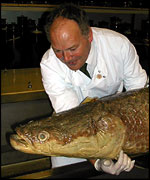
| | Sunday, 29 September, 2002, 21:33 GMT 22:33 UK All creatures great and small 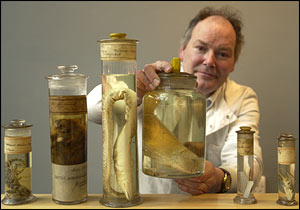 Oliver Crimmen with some of Darwin's own collection
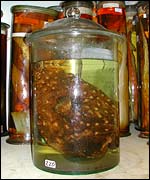
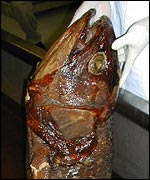
For sure, he has some humdrum specimens that can be seen in any fish market around the world - but he also has some real "Penny Blacks": monsters from the deep, Amazonian giants and, of course, the coelacanth, the famous "fossil fish". And you can see all them from Monday when the museum opens its �100m Darwin Centre to the public. Open to all Twenty-two million specimens, from mammals to molluscs, all of them pickled in alcohol, have been moved into the eight-floor state-of-the-art research and display facility.
It was a closed world; the large jars and tanks of the "Spirit Collection" were only available to researchers - and strictly by appointment only. "I guess the Victorians thought of my science as a below stairs activity, but we're out in the light now," says Crimmen, who joined the museum from college 30 years ago.
The guided tours through the dim, cool vaults of the new centre are sure to be the hottest tickets on the London visitors' scene for the next few months. Get over the "urgh" factor and be prepared to be amazed. Creatures, great and small, are stored in 450,000 jars. The smallest will fit in the cup of your hand; others weigh 60 kilograms and are kept in a "monster" basement known as the tankroom. Lights in the dark "My favourite specimen is a deep sea anglerfish with a stalk on its head and a luminous bulb," says Crimmen.
"The lights on its head lure prey within reach because it's living in the total darkness of the deep sea. "It comes from such a different world of massive pressure and darkness and you can tell by looking at it that it is very alien to our own terrestrial habitat - needle sharp teeth, tiny eyes and this amorphous black body totally invisible in the dark except for the little lights."
"The aquatic environment is so huge," says Crimmen. "These animals have invented everything you can possibly think of: light, electricity and so many bizarre lifestyles and shapes. And that's just the fish. "The more you look through the Darwin Centre collection, the more wonderful things you find." | |
See also:  24 Sep 02 | Science/Nature 01 Aug 01 | Science/Nature 18 Apr 00 | UK 16 Nov 99 | Science/Nature Internet links: The BBC is not responsible for the content of external internet sites Top Science/Nature stories now: Links to more Science/Nature stories are at the foot of the page. | |||||||||||||||||||||||||||||||||||||||||||||||||||||||||||||||||||||||||||||||||||||||||||||||||||||||||||||||||||||||||||||||||||||||||||||||||||||||||||||||||||||||||||||||||||||||||||||||||||||||||||||||||||||
| |
|  E-mail this story to a friend E-mail this story to a friend |
| |
| Links to more Science/Nature stories |
| | | ||
 | ||||
 | | Back to top
| ||
| ---------------------------------------------------------------------------------- To BBC Sport>> | To BBC Weather>> | To BBC World Service>> ---------------------------------------------------------------------------------- © MMIII | News Sources | Privacy |