|
 |
 | | | | | | ||||||||||||||||||||||||||||||||||||||||||||||||||||||||||||||||||||||||||||||||||||||||||||||||||||||||||||||||||||||||||||||||||||||||||||||||||||||||||||||||||||||||||||||||||||||||||||||||||||||||||||||||
| | | You are in: Science/Nature | ||||||||||||||||||||||||||||||||||||||||||||||||||||||||||||||||||||||||||||||||||||||||||||||||||||||||||||||||||||||||||||||||||||||||||||||||||||||||||||||||||||||||||||||||||||||||||||||||||||||||||||||||||
|
| | Tuesday, 24 September, 2002, 08:42 GMT 09:42 UK Glimpse of Darwin's legacy 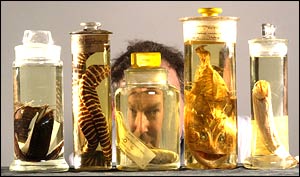
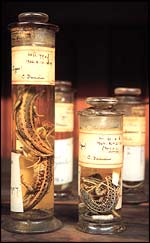
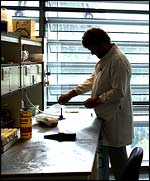
Here, visitors will be able to see the museum's scientists at work for the first time. The stars of the show include animals collected by Darwin on his 19th Century voyage on the Beagle and some from Captain Cook's expedition on the Endeavour.
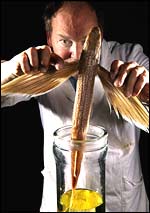
More recent specimens include a swordfish washed up on a beach near Bristol and a barracuda found in British waters last year. Explosive atmosphere There are 22 million specimens in all, stored in 450,000 jars, filling up 27 kilometres of shelf space. Professor Phil Rainbow, the curator of zoology at the museum, says they will now be stored in far better conditions than previously possible.
"In the new building, the offices and laboratories are state of the art and will keep the specimens in excellent condition." Phase One of the project, which involved re-housing all the zoology specimens, is now complete and opens to the public at the end of the month. Phase Two, which will house the museum's botanical and insect collections - including 28 million insects and six million plants - is due to open in 2007. Behind the scenes Professor Rainbow says that in addition to improving conditions for scientists and the collections, the new building will provide visitors with an unprecedented glimpse of the research that goes on behind the scenes.
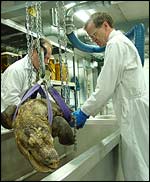
"This is not an exhibition. It's a working building full of scientists and full of collections. We thought it was important that we let our visitors see what we do and why it's important." Visitors will be taken on tours that include the Darwin Centre's tankroom, which contains 50 stainless steel tanks filled with spirit, housing the largest of the specimens, including a tuna, a shark, a komodo dragon, loggerhead turtles, giant spotted rays - and a rare "living fossil", the coelacanth.
Oliver Crimmen, the museum's fish curator, says: "These specimens were the most awkward things to house. Some were kept in a motley collection of containers under stairwells and in cupboards. "Now, they're much more accessible and there's an automated hoist to take the lids off the tanks and a ventilated dissection bench. Everything is state-of-the-art." 'Darwin would approve' Professor Steve Jones, of University College London, who has had a preview of the new centre, says: "I think for the public this magnificent building is a reminder that there is more to biology than natural history programmes.
A biologist from the Natural History Museum, Sandy Knapp, says that Charles Darwin himself would have been delighted. "I think he would have liked it. "His science was based on evidence and these specimens are what we base our science on today. "It's one of our duties to hold these specimens in trust for the next generation of scientists. And this new centre will help us to preserve them better than we could have hoped to do before." | |
  See also: 18 Apr 00 | UK 16 Nov 99 | Science/Nature 01 Aug 01 | Science/Nature Internet links: The BBC is not responsible for the content of external internet sites Top Science/Nature stories now: Links to more Science/Nature stories are at the foot of the page. | ||||||||||||||||||||||||||||||||||||||||||||||||||||||||||||||||||||||||||||||||||||||||||||||||||||||||||||||||||||||||||||||||||||||||||||||||||||||||||||||||||||||||||||||||||||||||||||||||||||||||||||||||
| |
|  E-mail this story to a friend E-mail this story to a friend |
| |
| Links to more Science/Nature stories |
| | | ||
 | ||||
 | | Back to top
| ||
| ---------------------------------------------------------------------------------- To BBC Sport>> | To BBC Weather>> | To BBC World Service>> ---------------------------------------------------------------------------------- © MMIII | News Sources | Privacy |