
|
 |
 | | | | | | |||||||||||||||||||||||||||||||||||||||||||||||||||||||||||||||||||||||||||||||||||||||||||||||||||||||||||||||||||||||||||||||||||||||||||||
| | | You are in: Science/Nature | |||||||||||||||||||||||||||||||||||||||||||||||||||||||||||||||||||||||||||||||||||||||||||||||||||||||||||||||||||||||||||||||||||||||||||||||
|
| | Thursday, 12 September, 2002, 11:57 GMT 12:57 UK Earth's new 'moon' is space junk 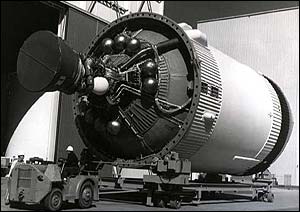 Has this rocket returned to Earth?
The latest analysis of the mysterious object called J002E3 suggests it could well be a leftover Saturn V rocket component from one of the Apollo lunar missions. The suspicious, fast-moving object was discovered on 3 September by Bill Yeung from his observatory in Arizona, US. Initial orbit calculations indicated that it was only about twice as far away as the Moon, and in orbit around the Earth. At first, astronomers were not sure whether the object was a passing chunk of rock that was captured by the Earth's gravity, or a piece of space junk. Now the mystery may have been solved thanks to a retrospective analysis of its movement through space. The object is most likely from the Apollo 12 mission, launched on 14 November 1969. Returned to sender It seems that the object was in orbit around the Sun until April of this year when it was captured by the Earth's gravity. The capture occurred when the object passed near the Earth's L1 Lagrange point, a region of space where the gravity of the Earth and Sun approximately cancel. J002E3 is the first known case of an object being captured by the Earth, although Jupiter has been known to capture comets in the same way. The most recent analysis of J002E3's pre-capture orbit about the Sun shows that it was always inside the Earth's orbit, and that it may have come within the Earth's vicinity in the early 1970s or late 1960s. This suggests that J002E3 was very likely orbiting the Earth during this period before escaping into solar orbit. Experts say that it is likely that this object is one of the Apollo Saturn rocket's third stages. The brightness of J002E3 seems to match the expected brightness of such a component. Analysis of J002E3's orbit suggests that there is a chance of it impacting the Moon in 2003, and an outside possibility of it burning up in the Earth's atmosphere sometime in the next decade or so. | | See also:  11 Sep 02 | Science/Nature 16 Jan 02 | Science/Nature Internet links: The BBC is not responsible for the content of external internet sites Top Science/Nature stories now: Links to more Science/Nature stories are at the foot of the page. | |||||||||||||||||||||||||||||||||||||||||||||||||||||||||||||||||||||||||||||||||||||||||||||||||||||||||||||||||||||||||||||||||||||||||||||
| |
|  E-mail this story to a friend E-mail this story to a friend |
| |
| Links to more Science/Nature stories |
| | | ||
 | ||||
 | | Back to top
| ||
| ---------------------------------------------------------------------------------- To BBC Sport>> | To BBC Weather>> | To BBC World Service>> ---------------------------------------------------------------------------------- © MMIII | News Sources | Privacy |






