|
 |
 | | | | | | ||||||||||||||||||||||||||||||||||||||||||||||||||||||||||||||||||||||||||||||||||||||||||||||||||||||||||||||||||||||||||||||||||||||||
| | | You are in: Science/Nature | ||||||||||||||||||||||||||||||||||||||||||||||||||||||||||||||||||||||||||||||||||||||||||||||||||||||||||||||||||||||||||||||||||||||||||
|
| | Monday, 2 September, 2002, 11:06 GMT 12:06 UK Obituary: Lord Porter 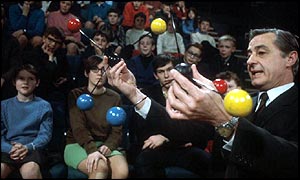 Lord Porter: Natural communicator George Porter, Lord Porter of Luddenham, had been a professor of chemistry for 35 years and was president of the Royal Society from 1985 to 1990. He was joint winner of the Nobel Prize for chemistry in 1967 for his work on photochemistry - chemical reactions triggered by light - and flash photolysis - photographing the behaviour of molecules during chemical reactions. In later life, George Porter had regularly stressed the need for better teaching of science, and accused successive governments of deliberately downgrading scientific research. He once said that Britain seemed well prepared to join the Third World of science. George Porter was a natural communicator and a pioneer of scientific programmes on television. He was knighted in 1972, made a member of the exclusive Order of Merit in December 1989 and a life peer in June 1990.
George Porter was born in December 1920 at Stainforth in Yorkshire, where his father was a Methodist lay preacher, and after grammar school, went to Leeds University. During World War Two he was a radar officer in the Royal Navy. He went up to Cambridge after the war, took a PhD, and then had several research jobs there. Later he was Professor of Chemistry at the Royal Institution of Great Britain, where he was also director for 20 years. Since 1987 he had been Professor of Photochemistry at Imperial College, London. When he was elected President of the Royal Society in December 1985, Sir George Porter was seen as the right man to put science back on the map in Britain and to try to stop the brain drain. In the next few years he showed himself to be a great champion of science and scientists. Warning He criticised proposals to concentrate research in selected centres and universities, saying this might stifle the original mind and encourage the safe and mediocre. He attacked the spread of an anti-science lobby, condemning what he saw as the skimping on long-term research and the concentration of scientific spending on short-term get-rich-quick projects.
Giving the 1988 Dimbleby lecture, he warned that Britain would fall still further behind its competitors because of the downgrading of research. Sir George gave a warning of a different kind when he said that the revolution in biology could insidiously change the human race. One of the most pressing and ominous questions, he said, was how far scientists should manipulate the process of evolution. Popular lecturer Discussing threats to the ozone layer, he said that specially-designed plants with a super-efficient photosynthesis system and put in an area 400 miles square, could supply the world with energy and help to beat the greenhouse effect. Sir George regretted the great educational divide between the sciences and the humanities after the age of 16. He told one interviewer that the teaching of science was most important at the age of five - and the teachers must be properly qualified.
His television series included Laws of Disorder (about thermodynamics) and Time Machine. He was the driving force behind the BBC's Young Scientist of the Year Award and presented the Royal Institution's children's Christmas lectures. Sir George, who was Chancellor of Leicester University from 1986 to 1995, won many awards and held more than 50 honorary professorships, doctorates and fellowships. He was a former member of the Open University Council and trustee of the British Museum. He was married with two sons. | | Internet links:  The BBC is not responsible for the content of external internet sites Top Science/Nature stories now: Links to more Science/Nature stories are at the foot of the page. | ||||||||||||||||||||||||||||||||||||||||||||||||||||||||||||||||||||||||||||||||||||||||||||||||||||||||||||||||||||||||||||||||||||||||
| |
|  E-mail this story to a friend E-mail this story to a friend |
| |
| Links to more Science/Nature stories |
| | | ||
 | ||||
 | | Back to top
| ||
| ---------------------------------------------------------------------------------- To BBC Sport>> | To BBC Weather>> | To BBC World Service>> ---------------------------------------------------------------------------------- © MMIII | News Sources | Privacy |