
|
 |
 | | | | | | ||||||||||||||||||||||||||||||||||||||||||||||||||||||||||||||||||||||||||||||||||||||||||||||||||||||||||||||||||||||||||||||||||||||
| | | You are in: Science/Nature | ||||||||||||||||||||||||||||||||||||||||||||||||||||||||||||||||||||||||||||||||||||||||||||||||||||||||||||||||||||||||||||||||||||||||
|
| | Saturday, 31 August, 2002, 23:08 GMT 00:08 UK How elephants 'snorkel' 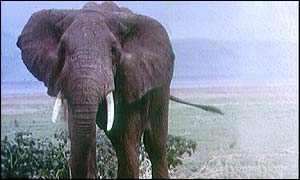 Elephants' ancestors may have been aquatic Elephants have special lung tissue which allows them to "snorkel" underwater, according to a US scientist. Dr John West found African elephants to have denser tissue than other mammals around their lungs which enabled them to breathe while submerged in a lake, apart from the tips of their trunks. He said the special tissue meant they could withstand the pressure of being underwater. But a UK expert doubted Dr West's theory and told BBC News Online the reason elephants could breathe while underwater was simply that they stuck their trunks up above the surface.
He said the pressure in the pleural membranes surrounding the lung was so great that in any other mammal, the vessels would rupture or cause rapid oedema - the accumulation of large amounts of fluid. Instead, he said elephants had sheets of dense connective tissue to allow their lungs to withstand the intense pressure. Dr West, who has made a study of the function and structure of the lung, said: "Many evolutionary biologists believe that the ancestors of the present day elephant were aquatic. "It seems reasonable that the trunk which allows them to snorkel developed at that time." No pressure But Nick Ellerton, curator at Knowsley Safari Park, told BBC News Online: "An elephant breathes through its trunk, and therefore it has that ability because of the physical make-up of the animal. "It can close its mouth underwater and breathe." Mr Ellerton said he did not see why elephants would have special lung tissue. "I don't see why they would need it when they just breathe directly through their trunks." He said they would not be exposed to much pressure at the depth at which they could walk on the bed of the lake and breathe through their trunks. "And once elephants are out of their depth, they have to swim," he added. | | See also:  08 Mar 01 | Science/Nature 13 Sep 00 | Science/Nature 20 Feb 00 | Washington 2000 Internet links: The BBC is not responsible for the content of external internet sites Top Science/Nature stories now: Links to more Science/Nature stories are at the foot of the page. | ||||||||||||||||||||||||||||||||||||||||||||||||||||||||||||||||||||||||||||||||||||||||||||||||||||||||||||||||||||||||||||||||||||||
| |
|  E-mail this story to a friend E-mail this story to a friend |
| |
| Links to more Science/Nature stories |
| | | ||
 | ||||
 | | Back to top
| ||
| ---------------------------------------------------------------------------------- To BBC Sport>> | To BBC Weather>> | To BBC World Service>> ---------------------------------------------------------------------------------- © MMIII | News Sources | Privacy |





