|
 |
 | | | | | | |||||||||||||||||||||||||||||||||||||||||||||||||||||||||||||||||||||||||||||||||||||||||||||||||||||||||||||||||||||||||||||||||||||||||||||||||||||||||||||||||||||||
| | | You are in: Science/Nature | |||||||||||||||||||||||||||||||||||||||||||||||||||||||||||||||||||||||||||||||||||||||||||||||||||||||||||||||||||||||||||||||||||||||||||||||||||||||||||||||||||||||||
|
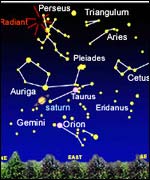
| | Tuesday, 13 August, 2002, 02:20 GMT 03:20 UK Skywatchers treated to celestial display  The Perseids are particularly spectacular Astronomers have been taking advantage of clear, almost moonless skies to watch spectacular displays of shooting stars. The Perseids are visible as streaks of coloured light in the night sky, and will be visible for several days, peaking in the early hours of Tuesday morning. They can be seen during most of the hours of darkness. "We've had quite a good night observing and we have seen some really bright and spectacular meteors," said Robin Scagell, of the Society for Popular Astronomy. Conditions are particularly good this year, because the moon is new and giving little light, giving the Perseids free range to shine against the night sky.
'Burning tears' Meteors are streaks of light in the sky caused by small pieces of comet dust disintegrating in the Earth's atmosphere. When comets pass close to the Sun, they begin to evaporate and leave behind a trail of gas and dust.
"It happens at this time of year each year and it's been happening like this as long as people can remember, certainly way back until around the beginning of the Christian era," said Robin Scagell. The Perseids appear in the constellation Perseus. They are among the fastest meteors, hitting the atmosphere at 60 kilometres per second. They occur each August when the Earth runs through the dusty debris from comet Swift-Tuttle. In the Middle Ages, there were known in England as the "burning tears of St Lawrence," because they come in August, around the anniversary of the saint's martyrdom at the hands of the Roman emperor Valerian in the year 258. | |
See also:  14 Nov 00 | Science/Nature 18 Nov 99 | Science/Nature 18 Nov 98 | The Leonids 98 08 Aug 02 | Europe 22 Apr 02 | Science/Nature Internet links: The BBC is not responsible for the content of external internet sites Top Science/Nature stories now: Links to more Science/Nature stories are at the foot of the page. | |||||||||||||||||||||||||||||||||||||||||||||||||||||||||||||||||||||||||||||||||||||||||||||||||||||||||||||||||||||||||||||||||||||||||||||||||||||||||||||||||||||||
| |
|  E-mail this story to a friend E-mail this story to a friend |
| |
| Links to more Science/Nature stories |
| | | ||
 | ||||
 | | Back to top
| ||
| ---------------------------------------------------------------------------------- To BBC Sport>> | To BBC Weather>> | To BBC World Service>> ---------------------------------------------------------------------------------- © MMIII | News Sources | Privacy |