|
 |
 | | | | | | |||||||||||||||||||||||||||||||||||||||||||||||||||||||||||||||||||||||||||||||||||||||||||||||||||||||||||||||||||||||||||||||||||||||
| | | You are in: Science/Nature | |||||||||||||||||||||||||||||||||||||||||||||||||||||||||||||||||||||||||||||||||||||||||||||||||||||||||||||||||||||||||||||||||||||||||
|
| | Tuesday, 6 August, 2002, 14:29 GMT 15:29 UK Hope for rare butterflies 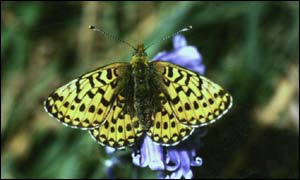 The pearl-bordered fritillary butterfly Schemes to encourage the breeding of rare butterflies in England may have slowed the decline of important species, say researchers. Government-funded projects aimed at improving butterfly habitats have involved more than 2,000 volunteers and 500 sites.
The volunteers regularly inspected and maintained key sites, some designated as official Environmentally Sensitive Areas. Farmers or landowners were paid to cooperate with the scheme. The volunteers checked for danger signs of habitat decay, such as the encroachment of shrub from surrounding areas. There are now thought to be in the region of 60 butterfly species native to the UK, and some others which visit in warmer months. Still falling Overall, experts still believe that there has been significant decline over the past decade. However, surveys suggest that 10 of 13 species dependent on specific habitats had done better under the scheme.
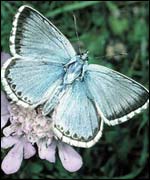
These include rare butterflies such as the chalkhill blue (Polyommatus coridon), dark green fritillary (Argynnis aglaja) and silver-spotted skipper (Hesperia comma). However, further analysis will reveal whether the efforts of the volunteers are the reason behind the improvement, or whether some other factor is at work. Dr Tom Brereton, head of research for the charity Butterfly Conservation, said: "We will now be analysing the data further to pinpoint the precise mechanism driving the improvement as well as working with Department for Environment, Food and Rural Affairs (Defra) officers to improve scheme design to bring even greater benefits in future." 'Good news' In all, the project cost �159,000, and was part-financed by the EU. Countryside Minister Elliot Morley said: "This is exciting first evidence that Defra's agri-environment schemes are starting to halt the decline in some important butterfly species." A spokesman for the Royal Society for the Protection of Birds (RSPB) said that other species benefited from efforts to preserve scarce habitats such as chalk grassland. He told BBC News Online: "We are seeing an upturn in some of our more threatened wildlife. "There is quite a bit of good news around - but everyone has to get behind these kinds of schemes to make them work." He called for extra funding for such projects to be made available - mainly by adding environmental "strings" to subsidies offered to the farming community. | | See also:  25 Apr 01 | Science/Nature 02 Mar 01 | Science/Nature 06 Jun 00 | Science/Nature Internet links: The BBC is not responsible for the content of external internet sites Top Science/Nature stories now: Links to more Science/Nature stories are at the foot of the page. | |||||||||||||||||||||||||||||||||||||||||||||||||||||||||||||||||||||||||||||||||||||||||||||||||||||||||||||||||||||||||||||||||||||||
| |
|  E-mail this story to a friend E-mail this story to a friend |
| |
| Links to more Science/Nature stories |
| | | ||
 | ||||
 | | Back to top
| ||
| ---------------------------------------------------------------------------------- To BBC Sport>> | To BBC Weather>> | To BBC World Service>> ---------------------------------------------------------------------------------- © MMIII | News Sources | Privacy |