|
 |
 | | | | | | |||||||||||||||||||||||||||||||||||||||||||||||||||||||||||||||||||||||||||||||||||||||||||||||||||||||||||||||||||||||||||||||||||||||||||||||
| | | You are in: Science/Nature | |||||||||||||||||||||||||||||||||||||||||||||||||||||||||||||||||||||||||||||||||||||||||||||||||||||||||||||||||||||||||||||||||||||||||||||||||
|
| | Friday, 2 August, 2002, 16:06 GMT 17:06 UK Hares get a helping hand 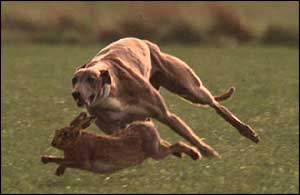 Coursing pits hare against greyhound: Supporters say killing is not the aim
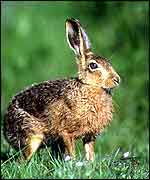
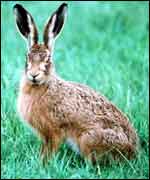
It has published a guide listing simple changes in farming practices which it says will help the hares' survival. Many of the measures are aimed at keeping the hares safe from predators, chiefly foxes. The UK hare population is thought to have fallen by more than 75% since 1945. The group is the Game Conservancy Trust (GCT), which works to ensure the future of game species in their natural habitat. Hare-friendly farming It says it has produced its guide to emphasise that conserving common animals is as important as saving rare ones.
It wants to restore the hares' fortunes, and is aiming for a target population of two million animals by 2010. Advice offered in the guide includes:
Fleet of foot But the trust says modern farming can make the hares more vulnerable to foxes. A fox family can eat the entire production of the local hare population, it says, though they usually kill leverets rather than adult hares.
They can reach speeds of 70 kph (45 miles an hour) to escape predators. Unlike rabbits, they do not live in burrows, but in "forms", small depressions in the ground among long grass. The Mammal Society attributes the hares' decline to increasingly specialised farming, which deprives them both of year-round grazing and of hiding places. Human stresses It says farm machinery and pesticides also kill many hares, and the rural fox population is a growing threat. Hares are often shot either as game or because of the damage they do to crops and young trees. They are hunted on foot by beagle packs, and on horseback by harriers. The GCT believes fewer than 5% of the hare population is killed this way annually. Some also die during hare coursing, when they are pursued by greyhounds. But the trust says: "The object of the course is to pursue and turn the hare, not to kill it. Most hares escape because they have more stamina than a greyhound." | | See also:  28 Feb 02 | UK 05 Dec 01 | Science/Nature 05 Nov 01 | Science/Nature Internet links: The BBC is not responsible for the content of external internet sites Top Science/Nature stories now: Links to more Science/Nature stories are at the foot of the page. | |||||||||||||||||||||||||||||||||||||||||||||||||||||||||||||||||||||||||||||||||||||||||||||||||||||||||||||||||||||||||||||||||||||||||||||||
| |
|  E-mail this story to a friend E-mail this story to a friend |
| |
| Links to more Science/Nature stories |
| | | ||
 | ||||
 | | Back to top
| ||
| ---------------------------------------------------------------------------------- To BBC Sport>> | To BBC Weather>> | To BBC World Service>> ---------------------------------------------------------------------------------- © MMIII | News Sources | Privacy |