
|
 |
 | | | | | | |||||||||||||||||||||||||||||||||||||||||||||||||||||||||||||||||||||||||||||||||||||||||||||||||||||||||||||||||||||||||||||||||||||||||||||
| | | You are in: Science/Nature | |||||||||||||||||||||||||||||||||||||||||||||||||||||||||||||||||||||||||||||||||||||||||||||||||||||||||||||||||||||||||||||||||||||||||||||||
|
| | Wednesday, 24 July, 2002, 18:08 GMT 19:08 UK Earth's early battering revealed 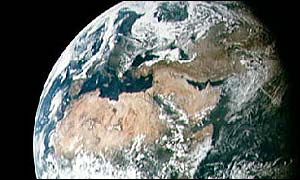 Today's Earth enjoys a more peaceful existence
The British and Australian researchers say there is no other conceivable explanation for new-found traces of an isotope, or form, of tungsten in 3.7-billion-year-old rocks from Greenland and Canada. The finding had been expected as several lines of evidence from Moon rocks and ancient craters on the Moon indicate the satellite was subjected to a so-called late heavy bombardment (LHB). Because the Earth is a larger target with a stronger pull of gravity, it was supposed that our planet must have been subjected to the same storm, too. Cataclysm The LHB was one of the most violent events in the history of our Solar System. For 100 to 200 million years, an unending rain of large meteoroids and asteroids struck the rocky inner worlds of the inner Solar System. Most of the craters in the southern hemisphere of Mars were formed during this event. The evidence for it on the Moon is everywhere. It was during the LHB that most of the large lunar impact basins were formed. Later they became filled with dark lava forming the now familiar lunar "seas". So should it have been for the Earth as well. Computer estimates suggest that over 200 million years our planet should have suffered over 22,000 craters larger than 20 km (12 miles), about 40 impact basins larger than 1,000 km (624 miles) and several massive 5,000 km (3,100 miles) basins. There would have been am impact that affected global conditions every 100 years or so. Must be extraterrestrial However, the active tectonic and chemical processes on Earth would have wiped clean much of the evidence of those craters. For this reason, scientists have looked for clues in the sedimentary rocks from Greenland and Canada - the oldest on Earth - that date from the waning phases of the LHB. Researchers from the University of Queensland, Australia, and the University of Oxford, UK, say they have detected in these rocks the chemical fingerprints of the meteorites left over from the LHB - specifically various types of tungsten atoms that must be extraterrestrial. Their research is published in the journal Nature. | | See also:  30 Nov 00 | Science/Nature 05 Sep 00 | Science/Nature 19 Feb 99 | Science/Nature Internet links: The BBC is not responsible for the content of external internet sites Top Science/Nature stories now: Links to more Science/Nature stories are at the foot of the page. | |||||||||||||||||||||||||||||||||||||||||||||||||||||||||||||||||||||||||||||||||||||||||||||||||||||||||||||||||||||||||||||||||||||||||||||
| |
|  E-mail this story to a friend E-mail this story to a friend |
| |
| Links to more Science/Nature stories |
| | | ||
 | ||||
 | | Back to top
| ||
| ---------------------------------------------------------------------------------- To BBC Sport>> | To BBC Weather>> | To BBC World Service>> ---------------------------------------------------------------------------------- © MMIII | News Sources | Privacy |





