|
 |
 | | | | | | |||||||||||||||||||||||||||||||||||||||||||||||||||||||||||||||||||||||||||||||||||||||||||||||||||||||||||||||||||||||||||||||||||||||||||||||||||||||||||||||||||||||||||||||||||||||||||||||
| | | You are in: Middle East | |||||||||||||||||||||||||||||||||||||||||||||||||||||||||||||||||||||||||||||||||||||||||||||||||||||||||||||||||||||||||||||||||||||||||||||||||||||||||||||||||||||||||||||||||||||||||||||||||
|
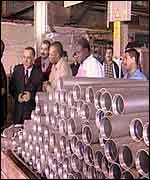
| | Wednesday, 8 January, 2003, 21:08 GMT UN 'not looking in right places'  Iraqi missile: No-one knows what weapons it may use
Despite that, Iraq is unlikely to use weapons of mass destruction (WMD) in any war, says Dr Thomas Cochran, nuclear programme director at the Natural Resources Defense Council. Dr Cochran, also an adviser to the US Department of Energy, believes the US would not use its nuclear weapons under any probable scenario.
He said he thought the US and its allies would attack Iraq in March: it was difficult to believe they would pull their troops back from the region now. Dr Cochran was speaking at a London seminar on nuclear policy and counter-proliferation organised by the Royal United Services Institute (Rusi) and Physicians for Social Responsibility (PSR) and sponsored by the Guardian newspaper. Military sites He said the Unmovic weapons inspectors were doing a good job of checking Iraq's known arms production sites, and it appeared work had not restarted there. They were less capable of checking whether the programmes had been restarted elsewhere. But the inspectors were not checking some possible sites at all, Dr Cochran said.
He told BBC News Online: "You can't rule it out that Iraq may have squirreled away some chemical weapons or Scud missiles or partially-completed nuclear warheads left over from the 1991 war. "If they have, can the inspection teams find them? No, and they're not even trying to, because they're not looking at military sites." But Dr Cochran said he thought the risk of Iraq using chemical weapons on the battlefield was low unless the US or the UK provoked it. And they would anyway be of limited use, because Iraq's arsenal would be enough for only a one-off artillery barrage. He thought an allied attack was unlikely to lead to an accidental release of Iraqi biological weapons, which were a much bigger threat, because the sites where they had been made had been inspected. There was no evidence of a new production programme, though they could be made fairly easily, even on the move. Dr Cochran discounted any foreseeable likelihood that the US itself might use nuclear weapons against Iraq. Worst scenario But he said an Iraqi chemical attack on Israel could unleash massive nuclear retaliation, wrought by just 10-15% of Israel's nuclear arsenal.
Depending on the type and number of weapons, their targets, and whether people were sheltering or in the open air, millions could die with many more injured. The worst case examined by Dr Cochran suggested an Israeli strike on 20 military targets and eight presidential sites with 100-kiloton bombs detonated at ground level. This, he said, could kill 3.7m people if they were in the open, with another 2.5m injured. He said: "The probability of a Scud attack on Israel with chemical weapons is low, so there's no high probability of a nuclear counter-attack. But if you get a big chemical release in Jerusalem or Tel Aviv, it's pretty scary." He told BBC News Online: "I think Israel is the likeliest power to use nuclear weapons, which are the biggest threat. But I think the probability it will use them is low." Bomb-building 'myth' Dr Cochran sharply criticised the UK and other countries which continue to reprocess plutonium commercially.
He said the 2001 terror attacks on the US had shown the practice was too dangerous. "The 9/11 attacks should have sounded the death knell of commercial reprocessing." He said the International Atomic Energy Agency's claim that 8kg of plutonium were needed to make a nuclear weapon was "a myth". "It's not hard to build a bomb with a little more than 1kg. It's even easier if you use highly enriched uranium. It would be easier than people realise for terrorists to build a bomb of some sort." He said a 1kt bomb in London or New York could be more lethal than those dropped on Hiroshima and Nagasaki in 1945. | |
See also:  08 Jan 03 | Middle East 11 Dec 02 | Americas 11 Sep 02 | Middle East 09 May 02 | Americas 20 Mar 02 | Politics Internet links: The BBC is not responsible for the content of external internet sites Top Middle East stories now: Links to more Middle East stories are at the foot of the page. | |||||||||||||||||||||||||||||||||||||||||||||||||||||||||||||||||||||||||||||||||||||||||||||||||||||||||||||||||||||||||||||||||||||||||||||||||||||||||||||||||||||||||||||||||||||||||||||||
 | |
|  E-mail this story to a friend E-mail this story to a friend |
| |
| Links to more Middle East stories |
| | | ||
 | ||||
 | | Back to top
| ||
| ---------------------------------------------------------------------------------- To BBC Sport>> | To BBC Weather>> | To BBC World Service>> ---------------------------------------------------------------------------------- © MMIII | News Sources | Privacy |






 You can't rule it out that Iraq may have squirreled away some chemical weapons or Scud missiles or partially-completed nuclear warheads