|
 |
 | | | | | | ||||||||||||||||||||||||||||||||||||||||||||||||||||||||||||||||||||||||||||||||||||||||||||||||||||||||||||||||||||||||||||||||||||||||||||||||||||||||||||||||||||||||||||||||
| | | You are in: Middle East | ||||||||||||||||||||||||||||||||||||||||||||||||||||||||||||||||||||||||||||||||||||||||||||||||||||||||||||||||||||||||||||||||||||||||||||||||||||||||||||||||||||||||||||||||||
|
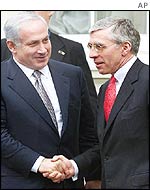
| | Monday, 23 December, 2002, 17:22 GMT Israel says Arafat blocking peace plan  Netanyahu is finding Europeans hard to convince The Israeli Foreign Minister, Binyamin Netanyahu, has said an international peace plan for the Middle East will fail unless there is a change in the Palestinian leadership. He was speaking after talks with his Russian counterpart Igor Ivanov in Moscow - the final leg of a four-nation European tour aimed at persuading countries to sideline Palestinian leader Yasser Arafat. Last week Russia, the United States, the European Union and the United Nations said they had made progress on the so-called road map for peace.
Speaking at a joint news conference, Mr Netanyahu said: "No matter what road map is put before us, if the other driver doesn't want to get to peace, no road map will help". "The present Palestinian leadership does not want to get to peace," he said. The road map, which is still under discussion, envisages a three-stage plan which will lead to a Palestinian state by 2005. Difficult task The BBC's Russian affairs analyst, Stephen Dalziel, says Mr Netanyahu has had little success in drumming up support for his position in Rome, Paris and London - and he is unlikely to leave Moscow with everything he wants.
Mr Netanyahu regards Mr Arafat as a terrorist, and remains firmly opposed to the creation of a separate Palestinian state. But while he knows that he can always find a sympathetic ear for his views in Washington, he has found the Europeans more difficult to convince. It has even been suggested that a joint press conference he was due to hold in London with the UK Foreign Secretary, Jack Straw, was cancelled because the two sides were so far apart that public disagreement could have led to a diplomatic incident. Russian interests The BBC analyst says the Israeli foreign minister could not expect much more joy from his meeting with Mr Ivanov. Russia still maintains cautious support for Mr Arafat, although it has called on him to reform the Palestinian administration. Moscow is also not opposed to the idea of a separate Palestinian state. In Soviet times, it was easy for Israel to dismiss Moscow's position as simply being anti-Israel. But with about a quarter of the population of Israel now being former citizens of the Soviet Union, Moscow can justifiably claim to have serious interests on both sides of the Middle East divide. | |
See also:  22 Dec 02 | Middle East 21 Dec 02 | Middle East 20 Dec 02 | Middle East 18 Dec 02 | Middle East 13 Nov 02 | Middle East 05 Nov 02 | Middle East Internet links: The BBC is not responsible for the content of external internet sites Top Middle East stories now: Links to more Middle East stories are at the foot of the page. | ||||||||||||||||||||||||||||||||||||||||||||||||||||||||||||||||||||||||||||||||||||||||||||||||||||||||||||||||||||||||||||||||||||||||||||||||||||||||||||||||||||||||||||||||
 | |
|  E-mail this story to a friend E-mail this story to a friend |
| |
| Links to more Middle East stories |
| | | ||
 | ||||
 | | Back to top
| ||
| ---------------------------------------------------------------------------------- To BBC Sport>> | To BBC Weather>> | To BBC World Service>> ---------------------------------------------------------------------------------- © MMIII | News Sources | Privacy |





 The present Palestinian leadership does not want to get to peace