|
 |
 | | | | | | |||||||||||||||||||||||||||||||||||||||||||||||||||||||||||||||||||||||||||||||||||||||||||||||||||||||||||||||||||||||||||||||||||||||||||||||||||||||||||||||
| | | You are in: Middle East | |||||||||||||||||||||||||||||||||||||||||||||||||||||||||||||||||||||||||||||||||||||||||||||||||||||||||||||||||||||||||||||||||||||||||||||||||||||||||||||||||
|
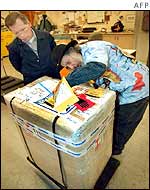
| | Sunday, 3 November, 2002, 09:52 GMT 'Evidence of Jesus' damaged  A crack now runs through the key inscription A 2,000-year-old casket, thought by some experts to be the first proof of the existence of Jesus Christ outside of the Bible, has been damaged on the journey to its first public showing. The small limestone box, known as an ossuary, is thought to have contained the bones of James, the brother of Jesus.
It is inscribed in Aramaic with the words "James, Son of Joseph, Brother of Jesus" and has been dated to about the year 63 AD. Officials from Toronto's Royal Ontario Museum said new cracks had appeared in the ancient burial casket when it was unpacked after being shipped from Tel Aviv in Israel via New York. Dan Rahimi, the director of collections management, said: "In transit there must have been further impact to the piece, or some kind of damage... "We can't really tell, but incipient cracks grew and other cracks appeared." Christ's family tree He said the box - which is about 50 centimetres (20 inches) long and valued at $2m - was still intact but there was concern that the new cracks, bigger than a hairline, could make it unstable. One of the cracks - which can be treated - runs through the inscription which is a key part of the ossuary being considered as evidence for the existence of Jesus.
Also significant is the mention of the dead person's brother on the casket, which would only have happened if the brother was well-known, according to a French specialist in ancient inscriptions, Andre Lemaire, who revealed the casket's existence last month. Mr Lemaire, writing in the Biblical Archaeology Review, said Jews at the time of Jesus routinely transferred bones of the dead from burial caves to ossuaries. 'First' artefact If the ossuary is authentic, it may be the most important find in the history of New Testament archaeology and the earliest known non-Biblical reference to Jesus, some academics believe. Experts do not doubt the existence of a person called Jesus, but almost everything known about him comes from writings in the New Testament. There are no other verified artefacts from the first century. The owner of the box is reported to have bought it for a few hundred dollars in the 1970s and been unaware of its possible significance. The museum in Toronto plans to exhibit the ossuary from 16 November to 29 December. | | See also:  22 Oct 02 | Middle East 27 Aug 02 | Middle East 26 Mar 01 | Entertainment 27 Mar 01 | UK 28 Sep 99 | Science/Nature Internet links: The BBC is not responsible for the content of external internet sites Top Middle East stories now: Links to more Middle East stories are at the foot of the page. | |||||||||||||||||||||||||||||||||||||||||||||||||||||||||||||||||||||||||||||||||||||||||||||||||||||||||||||||||||||||||||||||||||||||||||||||||||||||||||||||
 | |
|  E-mail this story to a friend E-mail this story to a friend |
| |
| Links to more Middle East stories |
| | | ||
 | ||||
 | | Back to top
| ||
| ---------------------------------------------------------------------------------- To BBC Sport>> | To BBC Weather>> | To BBC World Service>> ---------------------------------------------------------------------------------- © MMIII | News Sources | Privacy |





 Incipient cracks grew and other cracks appeared