|
 |
 | | | | | | ||||||||||||||||||||||||||||||||||||||||||||||||||||||||||||||||||||||||||||||||||||||||||||||||||||||||||||||||||||||||||||||||||||||||||||||||||||||||||||||||||||||||||||||||||||||||||||
| | | You are in: Middle East | ||||||||||||||||||||||||||||||||||||||||||||||||||||||||||||||||||||||||||||||||||||||||||||||||||||||||||||||||||||||||||||||||||||||||||||||||||||||||||||||||||||||||||||||||||||||||||||||
|
| | Thursday, 31 October, 2002, 11:31 GMT Palestinians query viability of two states 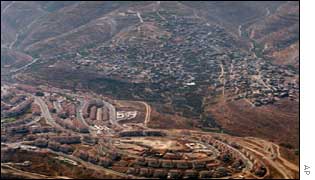 Settlement expansion continues despite an official 'freeze'
The accepted international solution to the Israeli-Palestinian conflict appears to be very clear - two states side by side. But the Palestinians are now questioning this. They say that continued Israeli settlement expansion and road building inside the West Bank may kill off the possibility of a viable Palestinian state.
Palestinian Liberation Organisation legal advisor Michael Tarazi believes that new Israeli outposts, settlements and roads in the West Bank may have a fatal effect on the possibility of a two state solution. "The danger here is that the Israelis have become so successful in changing the demographics and the geography on the ground that anything left to the Palestinians won't be viable," he says. "The idea of two states is now being seriously reconsidered by the Palestinians because we don't want a state that's simply a glorified Indian reservation." Terje Larsen, the UN special co-ordinator here, echoes some of these views. "We in the UN share these concerns about settlements and roads which will make it difficult if not impossible to establish a viable, contiguous state." But Israeli officials reject the assertion that settlements are expanding to the point of threatening a future Palestinian state. Join the dots "The demographics over the past two years have hardly changed in the West Bank and the Gaza Strip," says Mark Sofer, a senior official from the Israeli Foreign Ministry. "I really take issue with the assertion that it is the settlement issue which is preventing a solution to the Israeli Palestinian conflict. "Just two years ago we had a solution on the table proposed by the United States, endorsed by the international community, which called for this two state solution and exchanges of territory in that respect. And the Palestinians walked away from it."
Since Mr Sharon came to power a year and a half ago, left wing groups say that settlers have started up dozens of outposts - or makeshift settlements - in the West Bank. They say that only a tiny fraction have been dismantled. Many observers find it hard to reconcile Mr Sharon's support for the settler movement with his publicly stated belief that there should, in the end, be a Palestinian state. Many believe he can't have it both ways. According to the leading Israeli left wing politician Yossi Beilin, Mr Sharon's vision of a Palestinian state is "a joke rather than a state". Binational state The Palestinians believe that Mr Sharon is helping the settlers to prevent the creation of a meaningful Palestinian state. PLO legal advisor Michael Tarazi says that because of this, the Palestinians are now having to consider abandoning support for a two state solution.
"Our ultimate strategy will be based on whether or not the international community decides to intervene," he says. "Whether or not responsible Israelis get a hold of their senses and actually stop what their government's doing. "But if that doesn't happen we certainly will be forced to consider re-evaluating our position and moving from a movement of equal nationhood to equal citizenship." That's something that Israel would not accept. A single state would, within a few years, have an Arab majority - destroying for Israelis the concept of a Jewish state. Israeli officials believe the Palestinians are trying to find a pretext with the settlement issue to avoid having to consider a two state solution. "I cannot exacerbate enough the fear in Israeli society that the Palestinians are finding every excuse under the sun to walk away from the table - as they did two years ago," says Mark Sofer. But as Israel continues to expand its presence in the West Bank, Palestinians see the land they hope will make up their state shrinking and the possibility of a two state solution receding. 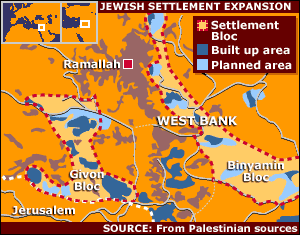 | |
See also:  23 Oct 02 | Middle East Internet links: The BBC is not responsible for the content of external internet sites Top Middle East stories now: Links to more Middle East stories are at the foot of the page. | ||||||||||||||||||||||||||||||||||||||||||||||||||||||||||||||||||||||||||||||||||||||||||||||||||||||||||||||||||||||||||||||||||||||||||||||||||||||||||||||||||||||||||||||||||||||||||||
| |
|  E-mail this story to a friend E-mail this story to a friend |
| |
| Links to more Middle East stories |
| | | ||
 | ||||
 | | Back to top
| ||
| ---------------------------------------------------------------------------------- To BBC Sport>> | To BBC Weather>> | To BBC World Service>> ---------------------------------------------------------------------------------- © MMIII | News Sources | Privacy |