|
 |
 | | | | | | |||||||||||||||||||||||||||||||||||||||||||||||||||||||||||||||||||||||||||||||||||||||||||||||||||||||||||||||||||||||||||||||||||||||||||||||||||||||||||||||||||||||||||||||||||||||||||||||
| | | You are in: Middle East | |||||||||||||||||||||||||||||||||||||||||||||||||||||||||||||||||||||||||||||||||||||||||||||||||||||||||||||||||||||||||||||||||||||||||||||||||||||||||||||||||||||||||||||||||||||||||||||||||
|
| | Friday, 27 September, 2002, 21:23 GMT 22:23 UK Two years of Israeli-Palestinian conflict 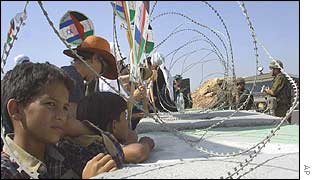 Peace looks further away than ever
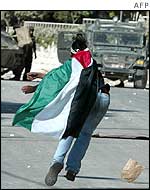
Saturday marks the second anniversary of the Palestinian uprising. It is 24 months since Israeli Prime Minister Ariel Sharon's controversial walkabout on one of Jerusalem's most sensitive holy sites, the Temple Mount.
Israeli troops have re-occupied virtually the entire West Bank. The Palestinian leader is a captive in his own headquarters, and the dream of a Palestinian state looks as far away as ever. More than 1,500 Palestinians and 600 Israelis have also been killed. I asked two bereaved mothers for their assessments of the past two years. Famous victim Beneath framed pictures of Yasser Arafat and Saddam Hussein, Amal al-Dura sits and grieves on a white plastic chair, her hands moving occasionally to her stomach.
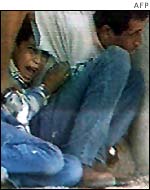
He will be named Muhammad after a brother he will never know - the intifada's most famous victim. Twelve-year-old Muhammad died in a hail of bullets cowering behind his father's back. Which side killed him is still in dispute. His final terrifying moments were captured on film, played and replayed around the world. This dead boy is still remembered, unlike so many others killed since. On the street corners around his family's modest house in the Bureij refugee camp in Gaza, every wall bears his face. His image is etched on every makeshift house. Eternal war The camp is a patchwork of dusty neglected streets.
"These two years have passed like two days," Amal tells me. "I cry all the time. I've tried to go out, to wedding parties, but I can't be happy like everyone else. I miss him all the time. "When I go to the market I remember how Muhammad used to come with me." She is counting down the days to the birth of the new son who will bear his name. "I hope he will have a better life, that there will be peace and no intifada. But the situation is getting worse. I swear that this war will go on forever," she says. 'Resistance must continue' I ask her: Would she want this boy to fight the Israelis when he grows up?
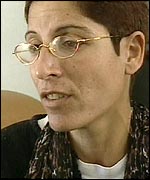
"If he felt in the future that he wanted to participate in the intifada, I wouldn't mind," she replies. "As long as there is occupation, resistance must continue. "I don't push my kids to go out to join in the intifada. The land is calling them to do so. Kids watch TV and analyse the situation for themselves. They don't wait for someone to analyse it for them. "For them the picture is clear. The scary thing is when they get older, I don't know what they are going to be," she adds. For Amal, the reason for all this is clear; the Israeli occupation of Palestinian lands. I tell her where we were headed next, back to Jerusalem to meet an Israeli mother who had also lost her son. "I send my condolences," she says. "But I ask Israeli mothers why they are not out demonstrating, calling for independence for the Palestinians, and to get Sharon out of power. "Let us live in peace together," she adds. Return to Jerusalem In her welcoming, well-tended home in Jerusalem Anat Yedid Levy is also mourning her son, killed in December last year.
"We hate holidays," she says, "and we hate the weekends". Moshe was just 19-years-old when he was killed, a student who went out on the town on a Saturday night and was killed in a double suicide bombing. "He should have been joining the army this week," she says. "Moshe was a very intelligent boy, very bright. He loved living and he had many plans for the future.
I ask if she could even imagine peace between Israel and the Palestinians. "It's impossible," she says. "I don't think there is any hope left. You cannot be an optimist here. "We cannot leave the territories and give back land as we were prepared to before. The only way ahead now is a big war," she adds. 'A different culture' Anat sees no fault on the Israeli side, no responsibility for the bloodshed of the past two years. "Only one man is to blame," she says. "Yasser Arafat. He has always loved blood, always wanted to kill, always hated the Israelis. And he has nothing to worry about. His family is not here. His wife and daughter are in France." I told Anat about Amal's message. "Have you any sympathy for the bereaved Palestinian mothers?" I ask. Her answer was swift and firm. "No," she said. "I have no sympathy for them. "They have a different culture, this martyrdom culture. They celebrate when their children are killed, they give out candies. "They believe that their children are in heaven. That's where they get their joy. "I don't want my kid to be in heaven. I want him here," he adds. Amal and Anat are almost the same age, both robbed of their sons, both fearful of the future. But apart from their grief, they share only one conviction, that the future already belongs to war. | |
See also:  27 Sep 02 | Middle East 24 Sep 02 | Middle East 14 Aug 02 | Middle East 14 Aug 02 | Middle East 27 Sep 01 | Middle East 28 Sep 00 | Middle East Internet links: The BBC is not responsible for the content of external internet sites Top Middle East stories now: Links to more Middle East stories are at the foot of the page. | |||||||||||||||||||||||||||||||||||||||||||||||||||||||||||||||||||||||||||||||||||||||||||||||||||||||||||||||||||||||||||||||||||||||||||||||||||||||||||||||||||||||||||||||||||||||||||||||
| |
|  E-mail this story to a friend E-mail this story to a friend |
| |
| Links to more Middle East stories |
| | | ||
 | ||||
 | | Back to top
| ||
| ---------------------------------------------------------------------------------- To BBC Sport>> | To BBC Weather>> | To BBC World Service>> ---------------------------------------------------------------------------------- © MMIII | News Sources | Privacy |