|
 |
 | | | | | | |||||||||||||||||||||||||||||||||||||||||||||||||||||||||||||||||||||||||||||||||||||||||||||||||||||||||||||||||||||||||||||||||||||||||||||||||||||||||||||||||||||||||||||||||||||||||||||||||||||||||||||||||||||||||||||||
| | | You are in: Middle East | |||||||||||||||||||||||||||||||||||||||||||||||||||||||||||||||||||||||||||||||||||||||||||||||||||||||||||||||||||||||||||||||||||||||||||||||||||||||||||||||||||||||||||||||||||||||||||||||||||||||||||||||||||||||||||||||||
|
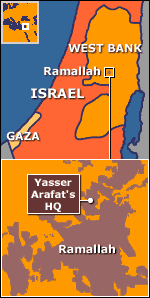
| | Monday, 23 September, 2002, 21:58 GMT 22:58 UK Arafat rejects Israeli demand 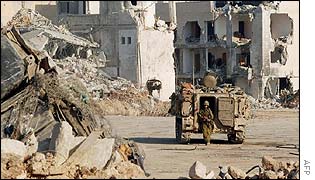 Israel says the siege will go on until those inside surrender Palestinian leader Yasser Arafat has rejected an Israeli demand to provide a list of all those who are sheltering with him in his besieged headquarters in the West Bank city of Ramallah.
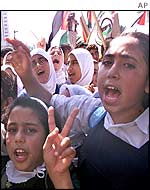
Mr Arafat conveyed the message through chief Palestinian negotiator Saeb Erekat - his first visitor in the only building still standing after Israel demolished the rest of the Ramallah compound. Mr Erekat said the Palestinian leader wanted political and security talks with Israel, also involving US representatives - a demand unlikely to be met by the Israelis, a BBC correspondent says. In New York, the UN Secretary-General, Kofi Annan, urged the two sides to seek a peaceful solution, saying that any policy based on forcing the other side to capitulate was "bankrupt". The Israeli flag has been draped on the building where Mr Arafat is trapped - a building where the Palestinian Authority president once received foreign dignitaries. More than 200 of Mr Arafat's aides and security officials are trapped in a wing of his office. Israel claims that wanted militants are among them, and that they should all give themselves up for questioning. But Mr Erekat said Israel refused to give him a list of the wanted men before he met with Mr Arafat, demanding instead a list identifying everyone inside. The BBC's Jonny Dymond reports that around 200 residents of Ramallah have gathered in the main Manara Square in an impromptu and noisy demonstration against the curfew imposed by Israeli authorities and the continuing siege of Mr Arafat's compound. Arafat defiant The BBC's Barbara Plett, in Ramallah, says the dilemma for the Palestinian leaders is that Israel is determined to get its hands on the Palestinian West Bank intelligence chief, Tawfik Tirawi - one of the wanted men in the compound.
Israeli forces have allowed Palestinian leaders to meet in Ramallah to try to come up with an offer that will satisfy the Israelis enough to end the siege. What worries the international community, the BBC's Paul Wood says, is that Israel seems to be moving steadily towards a decision to expel Mr Arafat. If that does happen, there will be fury in the Palestinian territories and throughout the Arab world - something that could force Washington to step in as it tries to build a coalition against Iraq, our correspondent says. Protests Thousands of Palestinians in the Gaza Strip have again taken to the streets in protest, but a call for a general strike appears to have been only partially observed.
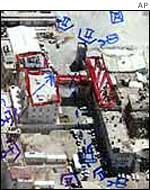
Despite the blockade, Mr Arafat managed to deliver a speech by telephone to about 3,000 Palestinian students gathered in Bethlehem - the only West Bank town centre from which the Israeli army has withdrawn. "We are going to march on Jerusalem and one of our children will raise the Palestinian flag on its walls. We are a people of giants who will not be subdued," a defiant Arafat told the crowd. "The situation is dangerous, but the people can face all dangers. The Palestinian people has seen more dangerous situations than this and won." International pressure Israel's decision to stop demolishing the Palestinian leader's headquarters followed international condemnation, and mild criticism from even its main ally, the United States. Responding to two suicide attacks last week, the army destroyed all buildings in the compound except for the one housing the Palestinian leader. Opening up an emergency debate at the UN on Monday, Mr Annan urged both sides to seek peace. "A policy based on forcing the other side to capitulate is a bankrupt policy. It is not working and it will never work. It only encourages desperation. It weakens moderates and strengthens extremists," Mr Annan said. An emergency meeting of the Arab League in Cairo ended on Monday with a statement condemning the US for supporting the "Israeli aggression" and calling on the international community to pressure Israel to lift the siege on Mr Arafat. | |
See also:  23 Sep 02 | Middle East 22 Sep 02 | Middle East 22 Sep 02 | Middle East 21 Sep 02 | Middle East 22 Sep 02 | Middle East Internet links: The BBC is not responsible for the content of external internet sites Top Middle East stories now: Links to more Middle East stories are at the foot of the page. | |||||||||||||||||||||||||||||||||||||||||||||||||||||||||||||||||||||||||||||||||||||||||||||||||||||||||||||||||||||||||||||||||||||||||||||||||||||||||||||||||||||||||||||||||||||||||||||||||||||||||||||||||||||||||||||||
| |
|  E-mail this story to a friend E-mail this story to a friend |
| |
| Links to more Middle East stories |
| | | ||
 | ||||
 | | Back to top
| ||
| ---------------------------------------------------------------------------------- To BBC Sport>> | To BBC Weather>> | To BBC World Service>> ---------------------------------------------------------------------------------- © MMIII | News Sources | Privacy |