|
 |
 | | | | | | ||||||||||||||||||||||||||||||||||||||||||||||||||||||||||||||||||||||||||||||||||||||||||||||||||||||||||||||||||||||||||||||||||||||||||||||||||||||||||||||||
| | | You are in: Middle East | ||||||||||||||||||||||||||||||||||||||||||||||||||||||||||||||||||||||||||||||||||||||||||||||||||||||||||||||||||||||||||||||||||||||||||||||||||||||||||||||||||
|
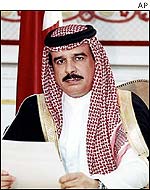
| | Sunday, 18 August, 2002, 14:04 GMT 15:04 UK Iran and Bahrain oppose Iraq attack 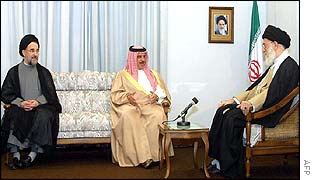 It was King Hamad's first visit since the 1979 revolution The king of Bahrain has issued a joint statement with Iranian leaders opposing any "unilateral" military strike against Iraq. It comes amid growing international disquiet about US President George W Bush's determination to depose Iraqi leader Saddam Hussein.
King Hamad, whose nation hosts the US Fifth Fleet, was paying his first visit to Iran since the 1979 Islamic revolution. The statement said: "We express our determined opposition to any unilateral military action against Iraq." It spoke of the two governments' "shared concern" over the "threats which loom over the region" and expressed opposition to any action that would harm the security and stability of the Gulf. The statement also expressed the two countries' solidarity with the Iraqi people, and call on the Iraqi Government to respect United Nations resolutions. 'Arrogance' Iraq has so far resisted UN demands for an unconditional invitation to weapons inspectors to resume their work inside the country, which is accused of developing nuclear, biological and chemical armaments.
Tehran, which remains the target of US economic sanctions and still has no diplomatic relations with Washington, has expressed strong hostility to American military action against Iraq. Iran's supreme leader took a harder line than King Hamad during the talks. "The (US) propaganda campaign about an attack on Iraq is flagrant arrogance," the official IRNA news agency quoted the Iranian supreme leader as saying. "The Islamic world must take an appropriate position on this issue... Given the extreme sensitivity of the Persian Gulf, with its major oil wells and gas fields, any incident in this region will be extremely prejudicial for whoever provokes it." Stronger ties Relations between Bahrain and Iran were poor for the two decades after the Shah of Iran was deposed, with Bahrain accusing Iran of stirring up unrest among the archipelago's Shia majority. They began to improve again in 1997 when Iran's reformist President Mohammad Khatami came to power, and ambassadors were exchanged in 1999. King Hamad, who came to the throne in 1999, has himself pushed for economic and political reforms to end decades of tension between Muslim sects in Bahrain. Members of the Shia majority have been pressing the country's ruling Sunni elite for better representation for several years. King Hamad is the third Gulf leader this month to use a visit to Tehran to express misgivings about US military action against Iraq, after Saudi Foreign Minister Saud al-Faisal and top Omani diplomat Yussef bin Alawi bin Abdullah. | | See also:  30 Apr 00 | Middle East 25 Apr 00 | Middle East 08 Feb 02 | Country profiles 06 Aug 02 | Country profiles 09 May 02 | Americas 11 Feb 02 | Middle East 06 Feb 02 | Americas Internet links: The BBC is not responsible for the content of external internet sites Top Middle East stories now: Links to more Middle East stories are at the foot of the page. | ||||||||||||||||||||||||||||||||||||||||||||||||||||||||||||||||||||||||||||||||||||||||||||||||||||||||||||||||||||||||||||||||||||||||||||||||||||||||||||||||
| |
|  E-mail this story to a friend E-mail this story to a friend |
| |
| Links to more Middle East stories |
| | | ||
 | ||||
 | | Back to top
| ||
| ---------------------------------------------------------------------------------- To BBC Sport>> | To BBC Weather>> | To BBC World Service>> ---------------------------------------------------------------------------------- © MMIII | News Sources | Privacy |