|
 |
 | | | | | | ||||||||||||||||||||||||||||||||||||||||||||||||||||||||||||||||||||||||||||||||||||||||||||||||||||||||||||||||||||||||||||||||||||||||||||||||||||||||||||||||||||||||||||||||||||||||||||
| | | You are in: Middle East | ||||||||||||||||||||||||||||||||||||||||||||||||||||||||||||||||||||||||||||||||||||||||||||||||||||||||||||||||||||||||||||||||||||||||||||||||||||||||||||||||||||||||||||||||||||||||||||||
|
| | Wednesday, 7 August, 2002, 22:28 GMT 23:28 UK The Palestinian way of death 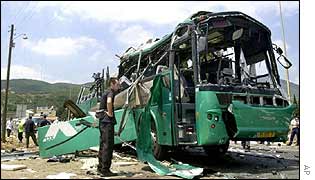 About 70 attacks have targeted Israelis in two years
It is written all over the walls in Gaza. In vivid reds, blues and yellows, in murals and sweeping Arabic script, the graffiti celebrates suicide bombers as heroes, along with other Palestinian fighters. Their attacks are called martyrdom operations.
In the West, suicide bombings are generally viewed as expressions of religious fanaticism, or just plain terrorism. In Israel these attacks have left hundreds of lives ruptured by loss, infected with fear and despair. But whatever else they are, for Palestinian militant groups suicide bombings have become a political weapon in the struggle against Israel. In Gaza that struggle has become daily life. Pressure Since the beginning of the Palestinian uprising the Israeli army has destroyed hundreds of houses; it has levelled thousands of acres of land, and killed more than 400 people. It is using overwhelming force to protect a handful of Jewish settlers living in Gaza. Palestinian young people are lining up to hit back as hard as they can.
Like the militants, most here describe suicide bombings as an attempt to increase the cost of the conflict for Israel. "We want to put fear inside the Israelis," says Mohammed, "so they can feel that there is a Palestinian society demanding its rights." Articulate and polite, they reject Western charges of terrorism. "The purpose of suicide bombing is to put pressure on the Israeli Government," says Youssef. "So that it will understand there is a nation growing up. The killing in itself is not the main aim." Role models "When there is a suicide bombing we are happy for one or two hours, or maybe a day," says Fatma. "But after, we suffer for it from Israeli shelling and bulldozing. There must be another way, but I don't know what it is." Other voices are also beginning to ask such questions. Some say this is becoming a culture of self-destruction. They warn of its effect on children, and a few are calling for an end to the practice altogether.
They were shot down before they got near it. Mohammed prides himself on giving his children the best: Ismail was a computer whiz, a top student who finished his homework before he set out that night. He had been asking more and more questions about the Israeli occupation, and the failure of international efforts to help end it. He left behind what is known as a martyr's letter, telling his stunned family that God would take him into Paradise, and asking Islamic extremist group Hamas to accept him. Mohammed blames the occupation for his son's death, not the suicide attackers who serve as role models. But, he says, this is going too far. "If I'd known Ismail would do something like this I would have stopped him!" he says. "Because this is useless." When nine other children from Ismail's school made such attempts, there was a public outcry. Anything goes The death of children raises the strongest emotions in this conflict. It is not just the effect on Palestinian children - it is also Israeli children who have been killed in suicide attacks. Hamas insists they are not a target. "Hamas operations are not directed and have never been directed against children," says Hamas political leader Ismail Abu Shanaab.
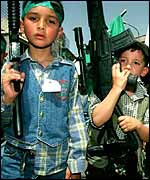
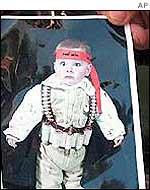
When pushed, though, he goes further. "To be frank with you, there are a lot of the moralities which got broken in this war," he says. "They are letting the Israelis kill Palestinians and they want the Palestinian to be moderate, to be moral. We cannot control the game because it has no rules, it has no limits." Chilling words, pointing to a bleak future, strengthened by the sight of young boys dressed with fake explosives at political rallies. Palestinians know suicide bombings have cost them international support. They know their society will pay a heavy price if children continue to glorify death. But they would argue that those children will choose destruction and despair as long as they see only a future of occupation and violence. | |
See also:  07 Aug 02 | Middle East 06 Aug 02 | Middle East 05 Aug 02 | Middle East 30 Jul 02 | Middle East 25 Jul 02 | Health 28 Jun 02 | Middle East Internet links: The BBC is not responsible for the content of external internet sites Top Middle East stories now: Links to more Middle East stories are at the foot of the page. | ||||||||||||||||||||||||||||||||||||||||||||||||||||||||||||||||||||||||||||||||||||||||||||||||||||||||||||||||||||||||||||||||||||||||||||||||||||||||||||||||||||||||||||||||||||||||||||
| |
|  E-mail this story to a friend E-mail this story to a friend |
| |
| Links to more Middle East stories |
| | | ||
 | ||||
 | | Back to top
| ||
| ---------------------------------------------------------------------------------- To BBC Sport>> | To BBC Weather>> | To BBC World Service>> ---------------------------------------------------------------------------------- © MMIII | News Sources | Privacy |