|
 |
 | | | | | | |||||||||||||||||||||||||||||||||||||||||||||||||||||||||||||||||||||||||||||||||||||||||||||||||||||||||||||||||||||||||||||||||||||||||||||||||||||||||||||||||||||||||||||||||
| | | You are in: Middle East | |||||||||||||||||||||||||||||||||||||||||||||||||||||||||||||||||||||||||||||||||||||||||||||||||||||||||||||||||||||||||||||||||||||||||||||||||||||||||||||||||||||||||||||||||||
|
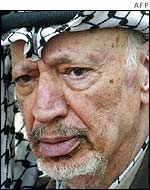
| | Monday, 15 July, 2002, 18:45 GMT 19:45 UK Arafat dispute dogs Egypt talks 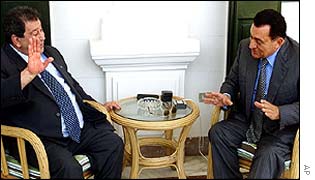 Egypt will not contemplate Arafat's removal A round of Israeli-Egyptian talks on peace in the Middle East has ended with little sign of agreement on the key issue of Palestinian leader Yasser Arafat's future. Israeli Defence Minister Binyamin Ben-Eliezer emerged from the talks in the Egyptian coastal resort of Alexandria saying he was opposed to Mr Arafat remaining in power.
The discussions came a day before a quartet of big powers and moderate Arab states were due to meet in New York to try to find a way to end the violence between Israel and the Palestinians. Mr Ben-Eliezer is the latest in a succession of politicians from Israel's Labour party to visit Egypt. Correspondents say that as the more dovish ring of the Israeli Government, their visits appear aimed at finding common ground with an Arab partner as part of efforts to relaunch the peace process. Arafat 'the problem' Mr Ben-Eliezer told reporters the Palestinian leader "was and still is the main problem" in solving the conflict with the Palestinians.
He said, however, that Israel and Egypt had agreed to "outflank" their differences over the Palestinian leader and "find somebody acceptable to all parties". But Mr Mubarak reiterated his opposition to removing Mr Arafat. The Egyptian president admitted that Egypt and Israel "differ on this issue," but said that "we can find a way, without affecting Arafat, to help negotiations and reach a solution". Mr Mubarak said Israeli Prime Minister Ariel Sharon had been "unresponsive" to suggestions conveyed by an envoy last week and described the Israeli leader as "rigid". Good relations Egypt has severed economic ties and downgraded diplomatic relations with Israel since November 2000 in protest at the crackdown in the Palestinian territories. Egypt has traditionally had better relations with leftist politicians in Israel such as Mr Ben-Eliezer, leader of the Labour Party, than with Mr Sharon's right-wing Likud. Asked why he did not speak directly with Mr Sharon, President Mubarak said the Israeli premier had once called him by telephone, only to end the call after a minute and a half. "So how should I speak to him?" he asked. "When I call I want someone to have a conversation with." Diplomatic push The BBC's Middle East analyst Roger Hardy says the future of the Palestinian leader will top the agenda at the meeting in New York on Tuesday. The talks will be attended by the US, the United Nations, the European Union and Russia, as well as officials from Egypt, Jordan and Saudi Arabia. US Secretary of State Colin Powell now wants the Palestinians to elect a prime minister so that Mr Arafat's position as leader becomes purely ceremonial. In return, they could have statehood in three years. But our correspondent says that the Europeans and the Arabs want to see parallel concessions by the Israelis. | |
See also:  03 Apr 02 | Middle East 10 Jun 02 | Middle East Internet links: The BBC is not responsible for the content of external internet sites Top Middle East stories now: Links to more Middle East stories are at the foot of the page. | |||||||||||||||||||||||||||||||||||||||||||||||||||||||||||||||||||||||||||||||||||||||||||||||||||||||||||||||||||||||||||||||||||||||||||||||||||||||||||||||||||||||||||||||||
| |
|  E-mail this story to a friend E-mail this story to a friend |
| |
| Links to more Middle East stories |
| | | ||
 | ||||
 | | Back to top
| ||
| ---------------------------------------------------------------------------------- To BBC Sport>> | To BBC Weather>> | To BBC World Service>> ---------------------------------------------------------------------------------- © MMIII | News Sources | Privacy |