|
 |
 | | | | | | ||||||||||||||||||||||||||||||||||||||||||||||||||||||||||||||||||||||||||||||||||||||||||||||||||||||||||||||||||||||||||||||||||||||||||||||||||||||||||||||||||||||||||||
| | | You are in: In Depth: September 11 one year on | ||||||||||||||||||||||||||||||||||||||||||||||||||||||||||||||||||||||||||||||||||||||||||||||||||||||||||||||||||||||||||||||||||||||||||||||||||||||||||||||||||||||||||||||
|
| |  Sunday, 1 September, 2002, 19:26 GMT 20:26 UK Sunday, 1 September, 2002, 19:26 GMT 20:26 UK Analysis: Terror group evolution 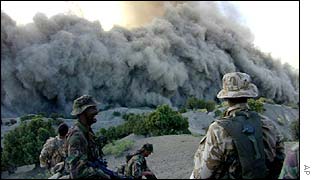 Presdent Bush's response has been with conventional forces
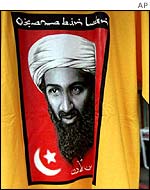
These debates are all to be welcomed even though there are no easy answers and only through such debate is the civilised world likely to be able to counter the long-term mainsprings of the current terrorist phenomenon. But policymakers have to address the more immediate problems of dealing with the al-Qaeda organisation as it appears to exist today, and the public anxieties that it creates and tries to feed upon. Sam Huntington's article The Clash of Civilisation in which he put forward the likelihood of a global antagonism between the Islamic and the Judeo-Christian world, has few real adherents in Western intellectual circles but it is a near certainty that Osama Bin Laden is one of them. Game-plan And if Western policy after 11 September is not handled carefully - does not draw wisely from the longer-term debates about the nature of the phenomenon and the appropriateness of the response - the danger is that it will do Osama Bin Laden's work for him and prove Huntington right after all.
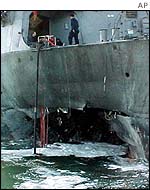
Al-Qaeda's threat as a terrorist group depends largely on its ability to think big and act in ways which are not in themselves novel but which, in combination, take Western societies and their security forces by surprise. There is nothing new about the terrorist use of 'sleepers' in target states, aircraft highjacking, suicide missions, technical and ideological training in safe haven countries, or in the use of extensive criminality to fund, facilitate and escape from, terrorist operations. One of things that had marked out al-Qaeda from many other terrorist groups is the tactical novelty of its attacks - terrorists posing as journalists to assassinate Ahmad Shah Massoud in a pre-arranged interview, rubber dinghies to bomb the USS Cole in Aden, use of civilian aircraft to destroy the World Trade Centre simply with their aviation fuel. And all of this executed with the ideologically charged willpower to carry it through at any cost. Political revolution Another mark of al-Qaeda's distinction is the scale of its political and terrorist ambitions. The al-Qaeda aims - the destruction of Israel, the removal of all Western influence from the Gulf and the establishment of an arc of Sharia law societies from North Africa to the Pacific - cannot be achieved by existing political mechanisms.
This breathtaking scale of al-Qaeda's ambitions provide both the strengths and weaknesses of the organisation and is the key to understanding how governments threatened by this phenomenon can most appropriately deal with it. It is a strength because, a year after 11 September, US intelligence estimates in its Patterns of Global Terrorism that anywhere between 10,00 and 30,000 "al-Qaeda operatives" - genuine technicians of war and terror, not merely sympathisers claiming allegiance - are present in more than 60 countries. Risk factor In most years the average number of recognised terrorist attacks in the world is about 350 to 400. That number actually decreased to 346 in 2001, but the death toll was more than 3,500 as oppose to an average that is near 400. Western society is very risk averse - a small number of deaths from any of the inherent dangers of modern living can cause major political upheavals in our political systems and in our social habits.
This asymmetry in the acceptance of risk has allowed al-Qaeda to exploit its notoriety to the full, to pose as the harbinger of revolution throughout the Islamic world, and to exploit the fears of the West with its own weapons - the modern media, the internet, the technologies of mass destruction, the propagation of celebrity and the propaganda of the deed. Common pattern It is not clear whether al-Qaeda's attempts to internationalise its appeal are bearing any fruit beyond the Gulf and in parts of central Asia. This attempt at internationalisation, however, is also al-Qaeda's weakness, since it represents the necessary dispersion of its activities as it goes into a 'phase two' period. There is a common pattern in the history of modern terrorist groups whereby they become known by their successes. Terrorist groups are normally deeply inefficient as operating organisations but they only have to be successful once every few months or years to become notorious and hence effective. When they are effective, governments attack them, normally with some determination, break up their inefficient structures and force them from hierarchical, centralised organisations into decentralised cell structures. Terror group evolution In phase one terrorist groups are successful in becoming notorious. In phase two they have to fight for survival precisely because they are notorious. Their modes of operation change, they become more dependent than hitherto on criminal networking for their survival and in any longer term coexistence between terrorism and criminality it is the latter which normally shapes the former. The successes become more sporadic, the message more diluted.
But pahse two does not always end in failure for the terrorist groups - far from it. A phase three may be discerned when some organisation and political coherence returns to a terrorist group which remains self-structured but more focused in its operations. To prevent this, the onus is on government authorities to exploit the weaknesses of a terrorist group in phase two to undermine its notoriety and diminish its overall operational effectiveness. This is the essence of the problem that al-Qaeda now poses for US and Western governments. Three pronged repsonse The reaction of President Bush to September 11 was itself relatively novel in that he launched a conventional war to defeat a terrorist group in its haven country, change a regime, and demand major changes in the international political system to address a series of internal instabilities, including international crime, money-laundering and trafficking in people and goods even within our own societies. That sort of response will not be available to him and his allies in the next phase. For this there is little alternative but to return to the lessons drawn from other terrorist and concentrate on penetration, protection and political processes.
Terrorists themselves may not welcome - or deserve - a political dialogue on their demands but new generations of potential supporters certainly do, and it is in the interests of government to engage them early and often. All of these traditional measures take time and patience, are expensive and can be politically as well as physically dangerous. But experience of terrorism throughout the last 40 years has shown that ultimately these are the most reliable ways to bolster society against terrorist threats. The aim should be to keep reactions proportionate and appropriate, and to learn to live with the risks and dangers of political conflict in whatever form it takes. | |
See also:  01 Sep 02 | September 11 one year on 01 Sep 02 | September 11 one year on 27 Aug 02 | September 11 one year on Internet links: The BBC is not responsible for the content of external internet sites Top September 11 one year on stories now: Links to more September 11 one year on stories are at the foot of the page. | ||||||||||||||||||||||||||||||||||||||||||||||||||||||||||||||||||||||||||||||||||||||||||||||||||||||||||||||||||||||||||||||||||||||||||||||||||||||||||||||||||||||||||||
| |
|  E-mail this story to a friend E-mail this story to a friend |
| |
| Links to more September 11 one year on stories |
| | | ||
 | ||||
 | | Back to top
| ||
| ---------------------------------------------------------------------------------- To BBC Sport>> | To BBC Weather>> | To BBC World Service>> ---------------------------------------------------------------------------------- © MMIII | News Sources | Privacy |