|
 |
 | | | | | | ||||||||||||||||||||||||||||||||||||||||||||||||||||||||||||||||||||||||||||||||||||||||||||||||||||||||||||||||||||||||||||||||||||||||||||||||||||||||||||||||||||||||||
| | | You are in: In Depth: September 11 one year on | ||||||||||||||||||||||||||||||||||||||||||||||||||||||||||||||||||||||||||||||||||||||||||||||||||||||||||||||||||||||||||||||||||||||||||||||||||||||||||||||||||||||||||||
|
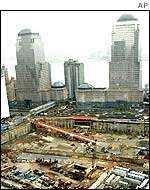
| |  Monday, 2 September, 2002, 09:38 GMT 10:38 UK Monday, 2 September, 2002, 09:38 GMT 10:38 UK Insurance industry adjusts 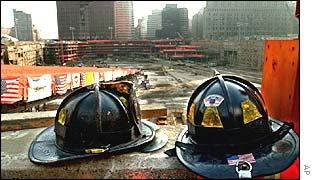 Claims mounted while Ground Zero was cleared
The bill for insured losses faced by the global insurance industry in the wake of last year's fatal 11 September attacks has reached $50bn (�33bn), according to industry estimates.
In July, the world's largest reinsurer, Munich Re, raised its provisions for 11 September from $2.2bn to $2.7bn, soon after the Lloyd's of London insurance market raised its estimate of the losses to �2bn ($3bn) from a previous estimate of �1.3bn. And yet, the widespread sympathy initially extended to the industry has recently turned to annoyance and anger at the way it has passed the losses down the food chain. Excessive premiums? A warning that premiums would rise was issued within two weeks of the attacks by Wilhelm Zeller, chief executive of the world's fifth largest reinsurer, Hannover Re.
The soaring insurance premiums have angered consumer groups and companies alike, especially since they have often been accompanied by reduced cover and higher excesses payable in the event of a claim. Industry hit The rising premiums have spelled disaster for insurance customers, with many being forced to opt for so-called self-insurance, or no cover at all.
The World Cup organiser Fifa says the cost of organising the recent tournament in Japan and Korea soared due to higher insurance premiums. And some observers have predicted that the tolls on San Francisco's Golden Gate Bridge could rise to pay for higher insurance costs which have been imposed along with the withdrawal of its terrorism cover. Beyond terrorist cover Rising insurance premiums have come across the board.
While in the US, the leading home insurer State Farm raised its premiums by 20% last year, blaming the ageing US housing stock, the high cost of home repairs, rising mold damage claims and bad weather. Health care premiums are on the up too, having risen 11% last year and 13% this year, and the retirement system for California's public sector has predicted that its health care premiums will rise 25% in 2003. The industry insists that the cost of health care insurance has risen because new, expensive treatments have been invented. But cynics find it curious that these premiums have all risen so much right now. Boom times Blunt observers have accused the insurance industry of using 11 September as an excuse to raise premiums across the board in order to make up for falling profits during recent years. Indeed, insurance rates are at a four decade-high, having surged more sharply than they did in the wake of the Hurricane Andrew and the Piper Alpha oil rig disasters in 1993-94. Insurance industry officials say the attacks have changed the industry's attitude to risk. There is a greater awareness that if the industry can push more costs onto their customers, they too will become more risk averse and in the long run this should reduce overall claims which currently run at historic lows. Cost cutting and efficiency improvements within the industry have also helped the industry's profits recover to healthy levels in recent months. Necessary shake-up? But in a sense, attacks acted merely as a wake-up call for an industry that was already enduring unsustainable losses, some analysts say. In 2001, insurers paid out almost $9bn more to cover losses and expenses than they received in premiums. And even before the attacks, many insurance companies - especially life insurers - had been hit by sliding stock markets which eroded their investment income and reduced their capital reserves. In fact, insurance premiums were already heading higher. The attacks may have merely speeded up the process. Government bailout What has incensed critics the most about the rising premiums is that in many cases the terrorism risks faced by the insurance industry are smaller than they ever where. Since 11 September, many governments have stepped in to offer cover in areas deemed to risky by the insurance industry. The UK government recently extended its terrorism insurance for commercial property to cover all risks, not merely fire and explosion, and it has vowed to cap the losses suffered by the industry at �30m per event and �60m per year. Germany and France have both set up similar terror insurance pools with billions of euros in reserves. Spain's state insurance facility guarantees private insurers' cover for extraordinary risks. While the US wants to protect the insurance industry from losses greater than $10bn from a terrorist attack. In addition, both the US and European governments have been forced to step in to offer cover for the airline industry after the insurance industry cancelled all third party war risk cover after the attacks. In order to prepare for the future, the airlines have been forced to look for long-term support from governments to set up their own mutual insurance companies after most traditional insurers have refused to return to the market. | |
See also:  10 Jul 02 | Business 10 Apr 02 | Business 24 Sep 01 | Business 13 Sep 01 | Business 12 Sep 01 | Business Internet links: The BBC is not responsible for the content of external internet sites Top September 11 one year on stories now: Links to more September 11 one year on stories are at the foot of the page. | ||||||||||||||||||||||||||||||||||||||||||||||||||||||||||||||||||||||||||||||||||||||||||||||||||||||||||||||||||||||||||||||||||||||||||||||||||||||||||||||||||||||||||
| |
|  E-mail this story to a friend E-mail this story to a friend |
| |
| Links to more September 11 one year on stories |
| | | ||
 | ||||
 | | Back to top
| ||
| ---------------------------------------------------------------------------------- To BBC Sport>> | To BBC Weather>> | To BBC World Service>> ---------------------------------------------------------------------------------- © MMIII | News Sources | Privacy |