|
 |
 | | | | | | |||||||||||||||||||||||||||||||||||||||||||||||||||||||||||||||||||||||||||||||||||||||||||||||||||||||||||||||||||||||||||||||||||||||||||||||||||||||||||||||||||
| | | You are in: In Depth | |||||||||||||||||||||||||||||||||||||||||||||||||||||||||||||||||||||||||||||||||||||||||||||||||||||||||||||||||||||||||||||||||||||||||||||||||||||||||||||||||||||
|
| | Monday, 23 September, 2002, 17:27 GMT 18:27 UK Iraq's military capabilities 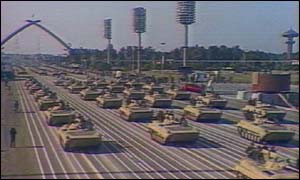 Iraqi military is still large
In regional terms Iraq used to be a major military player. Its armed forces were reasonably well equipped, especially the Republican Guard armoured and mechanised divisions. Its air force and arsenal of ground-to-ground missiles gave it an impressive long-range or deep strike capability. And during the Iran-Iraq war Iraqi commanders proved themselves adept at marshalling and moving armoured and mechanised formations over great distances, something watched, with some concern, by Israeli military planners. Today Iraq's armed forces are a shadow of their former self. Its defeat in the war to liberate Kuwait cost the country dearly. Iraq, for example, no longer has a Navy. And since then sanctions have taken their toll, restricting supplies of both new weaponry and vital spare-parts. The Iraqi Air Force is much reduced in numbers and there must be doubts both about the operational effectiveness of many of its aircraft and the training levels of its pilots.
Indeed the two US and British-policed no-fly zones over northern and southern Iraq constrain Iraqi operations and also enable western military planners to keep close tabs on the extent to which Iraq's air defence system has been re-built. But the Iraqi military is still large - with more than 300,000 troops - and potentially dangerous. It has the following assets:
Since then the Americans have grown stronger and Iraq significantly weaker. What defence? So what can the Iraq President Saddam Hussein do in military terms if the United States attacks? His essential strategy must be to thwart the Pentagon's central war aims which are to mount a swift campaign to isolate and destroy Iraq's centralised command system, after which, some analysts believe, Iraqi opposition will crumble. Saddam Hussein needs to force the Americans to fight in a number of parts of the country, and he needs to make the Americans pay a price in terms of casualties which (he may hope) will discourage them from seeing the operation through to the bitter end. Such reasoning may well be faulty. It would also require Iraq to de-centralise its command structure - to delegate powers to local commanders. This was reportedly done during Operation Desert Storm when subsidiary commanders were given authority to use chemical weapons if US and coalition forces were advancing on Baghdad. However, such delegation or de-centralisation of command carries huge risks in a war where Washington's goal is regime change. As many analysts have pointed out it risks weakening Saddam's authority at a moment of national crisis. The Pentagon is likely to mount a robust information or propaganda campaign both to encourage ordinary Iraqi Army units to lay down their arms, but also to make commanders - even those supposedly loyal to the regime - think very carefully about taking actions for which they might be held to account in the wake of Iraq's defeat. | |
See also:  27 Aug 02 | September 11 one year on 24 Jul 02 | Middle East 28 Aug 02 | World at One | |||||||||||||||||||||||||||||||||||||||||||||||||||||||||||||||||||||||||||||||||||||||||||||||||||||||||||||||||||||||||||||||||||||||||||||||||||||||||||||||||||
| |
|  E-mail this story to a friend E-mail this story to a friend |
| |
|
| | | ||
 | ||||
 | | Back to top
| ||
| ---------------------------------------------------------------------------------- To BBC Sport>> | To BBC Weather>> | To BBC World Service>> ---------------------------------------------------------------------------------- © MMIII | News Sources | Privacy |