
|
 |
 | | | | | | ||||||||||||||||||||||||||||||||||||||||||||||||||||||||||||||||||||||||||||||||||||||||||||||||||||||||||||||||||||||||||||||||||||||
| | | You are in: Health | ||||||||||||||||||||||||||||||||||||||||||||||||||||||||||||||||||||||||||||||||||||||||||||||||||||||||||||||||||||||||||||||||||||||||
|
| | Saturday, 14 December, 2002, 00:54 GMT Vaccine boosted by extra genes 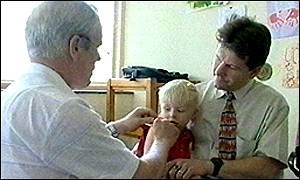 Many vaccines use live viruses Scientists may have found a way to make vaccines more effective by building in a human gene that activates the immune system. They are hoping that their discovery could boost the potency of jabs for both adults and children. Viral vaccines work by presenting a harmless version of the virus to the immune system to help prepare it for a genuine infection. The virus can either be dead, or "attenuated" - weakened so it cannot cause disease in humans. Attenuated vaccines work well because the immune system generates a more complete response if presented with a live virus as opposed to a dead one. Primed virus However, sometimes it is necessary to weaken the live virus so much that it no longer presents a decent target to the immune system. Scientists from the National Institute of Allergy and Infectious Diseases in Bethesda, US, believe they have found a way of priming the immune system to respond better even to the weakened virus. They do this by genetically modifying the virus so that it carries a human gene. This gene, called GM-CSF, is a growth factor that stimulates the immune system. Effective Monkeys inoculated with a modified virus produced between three and six times more antibodies than those given just the attenuated virus. Their results were published in the Proceedings of the National Academy of Sciences, and the authors wrote: "Although the use of any new vaccine strategy raises safety issues, these can be addressed in additional studies in primates before the initiation of clinical studies." Dr Sam Hou, from the Edward Jenner Institute for Vaccine Research in Compton, Berkshire, told BBC News Online that public acceptance of a genetically-modified virus would be one of the major obstacles to success. He said: "It's a great idea but there could be factors to do with safety." | | See also:  07 Feb 02 | Health 27 Aug 02 | Health 30 Apr 02 | Health 26 Feb 02 | Health Internet links: The BBC is not responsible for the content of external internet sites Top Health stories now: Links to more Health stories are at the foot of the page. | ||||||||||||||||||||||||||||||||||||||||||||||||||||||||||||||||||||||||||||||||||||||||||||||||||||||||||||||||||||||||||||||||||||||
| |
|  E-mail this story to a friend E-mail this story to a friend |
| |
| Links to more Health stories |
| | | ||
 | ||||
 | | Back to top
| ||
| ---------------------------------------------------------------------------------- To BBC Sport>> | To BBC Weather>> | To BBC World Service>> ---------------------------------------------------------------------------------- © MMIII | News Sources | Privacy |



