
|
 |
 | | | | | | ||||||||||||||||||||||||||||||||||||||||||||||||||||||||||||||||||||||||||||||||||||||||||||||||||||||||||||||||||||||||||||||||||||||||
| | | You are in: Health | ||||||||||||||||||||||||||||||||||||||||||||||||||||||||||||||||||||||||||||||||||||||||||||||||||||||||||||||||||||||||||||||||||||||||||
|
| | Saturday, 7 December, 2002, 00:16 GMT Eye microchip could save sight 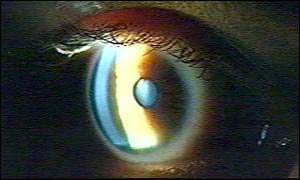 The implant could be available within three years Scientists are developing an electronic eye implant which they believe could help millions of people to see again. The microchip works by stimulating cells around the retina. This in turn stimulates cells in the brain, helping people to see once more. Tests on animals have shown that the tiny microchip can restore sight.
The microchip, which acts as an artificial retina, would be surgically implanted into the eye. Stimulates cells The electronic device stimulates surrounding cells that have not been damaged. This enables sight to be restored. The 4mm microchip is attached to a type of silicone called polydimethylsiloxane (PDMS). This substance is flexible and can conform to the curved shape of the retina without damaging surrounding tissue. Researchers at the University of California, who are also involved in the project, have already successfully tested the implant on three dogs. They are now working with scientists at the Lawrence Livermore National Laboratory to develop a microchip that could be used on humans. The implant needs to be strong to withstand surgery and to be biocompatible - able to withstand the physiological conditions of the eye. The researchers are now working on what they are describing as a second generation implant. This will have a greater number of electrodes and electronic chips. It will also be stronger to prevent it from curling or folding. The prototype implants contain 16 electrodes, allowing patients to detect the presence or absence of light. The artificial retina project's "next generation" device would have 1,000 electrodes and hopes to allow the user to see images. The scientists believe the implant could help people who are losing their sight or who are registered blind to see properly again. The project has received $9m funding from the US Department of Energy. Announcing the funding, Energy Secretary Spencer Abraham said: "Restoring vision to patients with retinal disorders is the truly marvellous goal of this team of researchers." | | See also:  09 Jan 02 | Health 30 Apr 99 | Health 18 Jan 00 | Science/Nature Internet links: The BBC is not responsible for the content of external internet sites Top Health stories now: Links to more Health stories are at the foot of the page. | ||||||||||||||||||||||||||||||||||||||||||||||||||||||||||||||||||||||||||||||||||||||||||||||||||||||||||||||||||||||||||||||||||||||||
| |
|  E-mail this story to a friend E-mail this story to a friend |
| |
| Links to more Health stories |
| | | ||
 | ||||
 | | Back to top
| ||
| ---------------------------------------------------------------------------------- To BBC Sport>> | To BBC Weather>> | To BBC World Service>> ---------------------------------------------------------------------------------- © MMIII | News Sources | Privacy |





