|
 |
 | | | | | | |||||||||||||||||||||||||||||||||||||||||||||||||||||||||||||||||||||||||||||||||||||||||||||||||||||||||||||||||||||||||||||||||||||||||||||||||||||||||||||||||||||||||||||||
| | | You are in: Health | |||||||||||||||||||||||||||||||||||||||||||||||||||||||||||||||||||||||||||||||||||||||||||||||||||||||||||||||||||||||||||||||||||||||||||||||||||||||||||||||||||||||||||||||||
|
| | Thursday, 5 December, 2002, 00:12 GMT Patients 'at risk' from drug errors 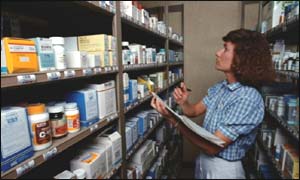 The errors were spotted by hospital pharmacists Errors in prescribing drugs may be putting many hospital patients at risk, a study suggests. Research carried out at a major London trust has identified 135 incidents a week where patients were prescribed the wrong medication. One in four of these errors were "potentially serious". The researchers said the findings highlighted the need for hospitals to improve their monitoring procedures. Mistakes identified Dr Bryony Dean and colleagues at the University of London based their findings on an audit at an unnamed teaching hospital in the capital over a four-week period in 1999.
Mistakes were identified in 1.5% of orders, equivalent to 135 a week. One in four of these was potentially serious and could have harmed the patient. Many of the errors were made by doctors in training. In almost two out of three cases, they had prescribed too much of a drug. In two out of five cases, they had prescribed the wrong drug. The most common mistakes involved painkillers like paracetamol, morphine and diamorphine. At high doses, these drugs can kill. The errors were picked up as part of routine daily checks by hospital pharmacists. The researchers were unable to say how many patients had been harmed as a result of the errors. But writing in the journal Quality and Safety in Health Care, they said the findings highlighted the need for hospitals to review their current procedures. They suggested that all members of a medical team should be told when an individual has made a mistake. They also called for pharmacists to be given a more formal role in monitoring the drugs prescribed to patients. A study carried out by the newly-created National Patient Safety Agency earlier this year found more than 24,500 "adverse incidents" at 28 trusts over a six-month period. In a statement, the NPSA said it was taking action to improve safety throughout the NHS. "The agency will run a new confidential reporting system which will monitor mistakes such as these so that lessons can be learnt at local and national level. "It will develop solutions to stop them being repeated. Following a period of testing and development, the NPSA plans to roll-out the system across the NHS in England and Wales from 2003." Ministers want serious errors in the use of prescribed drugs should be cut by 40% by 2005. | |
  See also: 17 Jun 02 | Health 18 Jun 02 | Health 18 Jun 02 | Health Internet links: The BBC is not responsible for the content of external internet sites Top Health stories now: Links to more Health stories are at the foot of the page. | |||||||||||||||||||||||||||||||||||||||||||||||||||||||||||||||||||||||||||||||||||||||||||||||||||||||||||||||||||||||||||||||||||||||||||||||||||||||||||||||||||||||||||||||
| |
|  E-mail this story to a friend E-mail this story to a friend |
| |
| Links to more Health stories |
| | | ||
 | ||||
 | | Back to top
| ||
| ---------------------------------------------------------------------------------- To BBC Sport>> | To BBC Weather>> | To BBC World Service>> ---------------------------------------------------------------------------------- © MMIII | News Sources | Privacy |