
|
 |
 | | | | | | ||||||||||||||||||||||||||||||||||||||||||||||||||||||||||||||||||||||||||||||||||||||||||||||||||||||||||||||||||||||||||||||||||||||||
| | | You are in: Health | ||||||||||||||||||||||||||||||||||||||||||||||||||||||||||||||||||||||||||||||||||||||||||||||||||||||||||||||||||||||||||||||||||||||||||
|
| | Thursday, 28 November, 2002, 15:04 GMT Debate over human-mouse mix 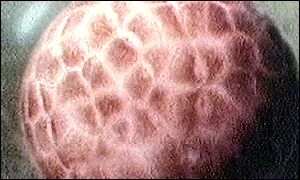 The developing embryo might have human and mouse cells A panel of North American experts has met to debate plans to join up human and mouse cells to create an embryonic "chimera". The strange combination could help doctors test the potential of special stem cells to fight disease. However, many experts consider the bizarre research to be unnecessary and unethical. One possible test would involve the injection of human stem cells into an early mouse embryo called a blastocyst.
Scientists would look to see if these human stem cells contributed to the development of tissues within the mouse embryo. While scientists could not guarantee that the embryo would not simply wither, it is possible that a mouse containing human cells would be born. Useful or dangerous? Many scientists would regard this hybrid mouse strain as highly useful, as it would show a more "human" response to many diseases, and allow doctors to model more effective treatments. If the human cells spread evenly throughout this mouse, then it would also imply the potential of the cells to work well in the treatment of human disease. However, there are fears that a mouse with a "human" cell brain could develop, or that a rodent might produce human sperm. The debate, at New York Academy of Sciences this month, involved nine researchers who discussed the wider issues of ensuring the quality of human stem cells. "Unacceptable" Dr Janet Rossant, of Mount Sinai Hospital in Toronto, told the New York Times that she opposed the development if the human cells ended up making a major contribution to the mouse. "I think that is something that most people would find unacceptable," she told the newspaper. Dr Anne Mclaren, from the Wellcome/Cancer Research UK Institute at the University of Cambridge, said that she would have few objections to the use of the technique, as the stem cells would be unlikely to persist long in any "chimera" embryo. She told BBC News Online: "One really needs to see what these stem cells will do in a developing embryo. "Because they come from a larger animal, the cells tend to divide at a slower rate, and they are unlikely to persist for long. It might be good to try primate cells first. "Human stem cells have already been put into adult mice - and human genes are routinely added to mouse embryos." | | See also:  06 Apr 00 | Health 25 Nov 02 | Health 18 Nov 02 | Science/Nature Internet links: The BBC is not responsible for the content of external internet sites Top Health stories now: Links to more Health stories are at the foot of the page. | ||||||||||||||||||||||||||||||||||||||||||||||||||||||||||||||||||||||||||||||||||||||||||||||||||||||||||||||||||||||||||||||||||||||||
| |
|  E-mail this story to a friend E-mail this story to a friend |
| |
| Links to more Health stories |
| | | ||
 | ||||
 | | Back to top
| ||
| ---------------------------------------------------------------------------------- To BBC Sport>> | To BBC Weather>> | To BBC World Service>> ---------------------------------------------------------------------------------- © MMIII | News Sources | Privacy |





