|
 |
 | | | | | | |||||||||||||||||||||||||||||||||||||||||||||||||||||||||||||||||||||||||||||||||||||||||||||||||||||||||||||||||||||||||||||||||||||||||||||||||||||||||||
| | | You are in: Health | |||||||||||||||||||||||||||||||||||||||||||||||||||||||||||||||||||||||||||||||||||||||||||||||||||||||||||||||||||||||||||||||||||||||||||||||||||||||||||||
|
| | Tuesday, 26 November, 2002, 10:08 GMT More grim news expected on Aids 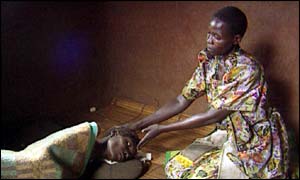 Aids has claimed millions of lives in southern Africa The latest global estimates of the extent of the HIV/Aids epidemic are expected to make grim reading. The UNAids figures, to be released later on Tuesday, are likely to show another increase in the number of millions living with the virus. The epicentre of the tragedy remains sub-Saharan Africa, with infection rates in other parts of the world continuing to climb steeply. The report is expected to say that the virus will surge in Asia in the next five years unless prevention efforts are increased. At the end of 2001, an estimated 40 million adults were living with HIV/Aids. Globally, there were estimated to be 13.4m children orphaned by the disease. Disaster area Three million people died of Aids in 2001. The majority were in sub-Saharan Africa, where the impact of the infection has drastically cut average life expectancy in even the more developed countries.
Average life expectancy in the region has fallen from 62 years to 47 years. The disease has not only stripped away young fathers and mothers, but skilled professionals such as teachers vital to economic development. The message from UNAids in 2001 was that the virus was reversing decades of economic development. UNAids continues to press for increased efforts in prevention and treatment, even by the most hard-pressed governments. In the US, a large budget spent on extensive prevention efforts are thought to have saved up to 1.4m people from contracting HIV, according to a recent study. However, these levels of spending are impossible to reproduce in many developing countries.
In many parts of the world, there is still a lack of knowledge about the virus, and how its spread can be prevented. One of the biggest concerns for experts is the explosion of cases in countries such as China and India, even though the overall number of cases is still dwarfed by the disaster in southern Africa. In July UNAids chief executive Dr Peter Piot warned: "We still do not know how bad the situation is in India, China or the former Soviet Union, for example, and these are major populations. "These are big countries where Aids is still in its infancy. "Overall, we are still really in the early phases of the Aids epidemic." | |
See also:  02 Jul 02 | Health 02 Jul 02 | Health 25 Jun 02 | Africa Internet links: The BBC is not responsible for the content of external internet sites Top Health stories now: Links to more Health stories are at the foot of the page. | |||||||||||||||||||||||||||||||||||||||||||||||||||||||||||||||||||||||||||||||||||||||||||||||||||||||||||||||||||||||||||||||||||||||||||||||||||||||||||
| |
|  E-mail this story to a friend E-mail this story to a friend |
| |
| Links to more Health stories |
| | | ||
 | ||||
 | | Back to top
| ||
| ---------------------------------------------------------------------------------- To BBC Sport>> | To BBC Weather>> | To BBC World Service>> ---------------------------------------------------------------------------------- © MMIII | News Sources | Privacy |