
|
 |
 | | | | | | ||||||||||||||||||||||||||||||||||||||||||||||||||||||||||||||||||||||||||||||||||||||||||||||||||||||||||||||||||||||||||||||||||||||
| | | You are in: Health | ||||||||||||||||||||||||||||||||||||||||||||||||||||||||||||||||||||||||||||||||||||||||||||||||||||||||||||||||||||||||||||||||||||||||
|
| | Monday, 25 November, 2002, 08:43 GMT 'Dolly' scientist embryo bid 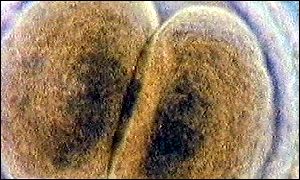 Scientists "fooled" cells into dividing The man who led the team which created Dolly the sheep has applied to use cloning technology to create human embryos. The Human Fertilisation and Embryology Authority will rule next year whether Professor Ian Wilmut, from the Roslin Institute in Edinburgh, Scotland, can proceed. What he wants to do is far removed from efforts elsewhere in the world to create a completely cloned human baby. This kind of procedure would be illegal in the UK. A panel of experts advising the UK Government has recommended the "limited" use of "therapeutic cloning" - that is, cloning technology aimed at producing medical treatments. These experiments, it is hoped, might one day help people with degenerative illnesses such as Parkinson's disease. This is because the tissue created by the process could be a limitless source of various types of "stem cells" which could used in tissue transplant. No sperm However, any research involving the creation of human embryos remains highly controversial. Professor Wilmut wants a licence to carry out "parthenogenesis". This involves "fertilisation" of a human egg without using a sperm. An unfertilised egg is stimulated in the laboratory so it starts dividing and becoming an embryo on its own. Essentially, the egg is "fooled" into thinking it has been fertilised, and begins the division process. Similar experiments have been carried out on eggs from animals, including monkeys. And the process occurs naturally in some species, such as ants, bees and lizards. Short 'life' Some scientists do not regard the "embryos" created via this process as genuine embryos - there is a possibility that they would not be considered as such by the terms of the 1990 Human Embryology Act. These embryos rarely survive beyond the early stages of development. The HFEA is the body set up to administer the Act - all research involving embryos must apply for and be granted a licence by the authority. Two fertility doctors have already claimed to have implanted human embryo clones into women with the aim of creating a baby. This research has been almost universally condemned both within and outside the international scientific community. It has not yet been confirmed whether any woman has become pregnant as a result of these experiments. | | See also:  26 Nov 01 | Science/Nature 20 Jan 98 | Science/Nature 16 Aug 00 | Science/Nature 26 Nov 01 | Science/Nature 17 Jul 02 | Health Internet links: The BBC is not responsible for the content of external internet sites Top Health stories now: Links to more Health stories are at the foot of the page. | ||||||||||||||||||||||||||||||||||||||||||||||||||||||||||||||||||||||||||||||||||||||||||||||||||||||||||||||||||||||||||||||||||||||
| |
|  E-mail this story to a friend E-mail this story to a friend |
| |
| Links to more Health stories |
| | | ||
 | ||||
 | | Back to top
| ||
| ---------------------------------------------------------------------------------- To BBC Sport>> | To BBC Weather>> | To BBC World Service>> ---------------------------------------------------------------------------------- © MMIII | News Sources | Privacy |



