|
 |
 | | | | | | |||||||||||||||||||||||||||||||||||||||||||||||||||||||||||||||||||||||||||||||||||||||||||||||||||||||||||||||||||||||||||||||||||||||||||||||||||||||||||||||||||||||||
| | | You are in: Health | |||||||||||||||||||||||||||||||||||||||||||||||||||||||||||||||||||||||||||||||||||||||||||||||||||||||||||||||||||||||||||||||||||||||||||||||||||||||||||||||||||||||||||
|
| | Wednesday, 20 November, 2002, 18:12 GMT Cervical cancer vaccine success 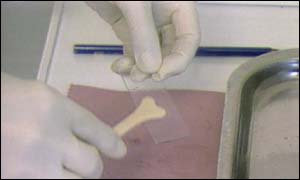 The vaccine could mean an end for smear tests A vaccine to protect women from one of the biggest cancer killers could be available within five years. Early clinical trials of a vaccine for cervical cancer have shown that it is 100% effective. It also protects against genital warts. The breakthrough could help to save thousands of lives each year.
The vaccine works by triggering the body's immune system to attack the human papiloma virus (HPV), which has been linked to almost all cases of cervical cancer. Further trials Merck Sharp & Dohme, the company behind the vaccine, said further studies are needed but that it could be available in a few years. The vaccine would be given to teenage girls. It would only work in females who have not yet become sexually active. This is because HPV is transmitted through sexual intercourse. The vaccine fights four of the most common strains of HPV, including a strain that causes genital warts. Early trials on almost 2,400 women between the ages of 16 and 23 in the United States have shown that it reduced the incidence of HPV by 100% after one year.
These will include 250 women at centres in Glasgow, London and Nottingham. If the trials are successful the company will then be able to apply for a licence to manufacture and sell the vaccine. A company spokeswoman told BBC News Online: "Recruitment is currently under way in three centres in the UK. If these phase three trials are successful then we may have a vaccine within several years." Professor David Jenkins, who will lead the Nottingham study, said: "What we're trying now is to see if this can be rolled out into real life and into preventing cervical cancer. But it will take five years at least." Breakthrough Dr Anne Szarewksi, a clinical consultant at Cancer Research UK, described the results as "very exciting". "These results look very, very good. People have been trying to get a vaccine for years and years," she told BBC News Online. "This is really the holy grail of cancer research. It is very exciting." But Dr Szarewski warned that the vaccine would not help women who have already become sexually active. "This vaccine would have to be given to teenage or young girls who haven't become sexually active yet. "An entire generation who have already become sexually active would not benefit." But she added: "Once it does become available to a new generation of women then I see a situation where they will no longer have to have smear tests." HPVs are a group of more than 80 different types of virus. They can be transmitted through sexual intercourse. It is estimated that up to 15% of women aged 20 to 30 women and up to 6% of women over 40 carry the virus. The majority do not go on to develop cancer. | |
See also:  17 Mar 00 | C-D 26 Aug 99 | Medical notes 01 Aug 02 | Health 07 Nov 02 | Health 28 Feb 02 | Health 17 Mar 00 | C-D Internet links: The BBC is not responsible for the content of external internet sites Top Health stories now: Links to more Health stories are at the foot of the page. | |||||||||||||||||||||||||||||||||||||||||||||||||||||||||||||||||||||||||||||||||||||||||||||||||||||||||||||||||||||||||||||||||||||||||||||||||||||||||||||||||||||||||
| |
|  E-mail this story to a friend E-mail this story to a friend |
| |
| Links to more Health stories |
| | | ||
 | ||||
 | | Back to top
| ||
| ---------------------------------------------------------------------------------- To BBC Sport>> | To BBC Weather>> | To BBC World Service>> ---------------------------------------------------------------------------------- © MMIII | News Sources | Privacy |