
|
 |
 | | | | | | ||||||||||||||||||||||||||||||||||||||||||||||||||||||||||||||||||||||||||||||||||||||||||||||||||||||||||||||||||||||||||||||||||||||||||||||||||||||||||||||||||||||||||||||||||
| | | You are in: Health | ||||||||||||||||||||||||||||||||||||||||||||||||||||||||||||||||||||||||||||||||||||||||||||||||||||||||||||||||||||||||||||||||||||||||||||||||||||||||||||||||||||||||||||||||||||
|
| | Tuesday, 19 November, 2002, 09:09 GMT Lab staff shortage at 'critical level' 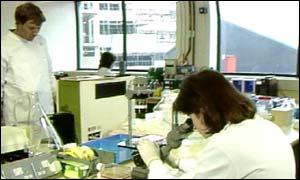 Laboratory staff are needed at all levels A severe lack of hospital laboratory staff is leaving serious illnesses undiagnosed, it has been claimed. The Royal College of Pathologists says the shortage is putting patients' lives at risk. It points to surveys which indicate the industry is short of 1,000 staff across all grades.
Pathology is also very often left off doctor's training, resulting in a fewer students coming through the system, the royal college said. Low pay Staff shortages are compounded by the fact that some laboratory scientists start on just �11,000 per year. Sir John Lilleyman, president of the Royal College, said the Department of Health appeared to be too complacent about the situation. He told the BBC: "There is a huge threat, like a train coming down the track straight at them with its horn blaring, and they are not noticing it. "If we don't do something, with the increasing demand on pathology services it is just going to collapse, there is no way it can continue." Sir John said NHS trust managers had failed to give proper priority to pathology units.
"They are seen by a lot of management boards as overheads - what they are is an essential clinical service without which the trust would fall over." Roger Lyons, general secretary of the MSF union which represents many laboratory scientists, said 60% of all hospital treatment required input from pathology labs. "Many labs are under-staffed, the lives of patients are at risk, diagnosis is delayed, and, in particular, the government's national cancer plan just cannot be implemented. "We don't understand why the NHS will not give proper recognition to the scientific staff who are the key building block in NHS delivery." Avoidable errors Sarah Harman is a solicitor who has dealt with 200 women over the last five years whose cervical cancer smears were not properly analysed. She said: "Our laboratories are not functioning as well as they could. "These are avoidable cases where a woman should not have developed cancer." A Department of Health spokesman said a strategy for the modernisation of pathology services was being prepared. "We recognise that for too long NHS pathology has been seen as a back-room service and not as the key clinical support service it really is. "That is why we are committed to improving pathology by expanding the workforce and getting extra investment into pathology services in the NHS." But Dr Evan Harris, Liberal Democrat health spokesman, said government policy had forced NHS managers to focus on certain areas such as elective surgery, to the neglect of others such as pathology. He said many pathology specialists were choosing to work in the private sector, rather than the NHS because the money offered by the health service was far too low. He added that the negative publicity surrounding errors had also put people off a career in the pathology services. | |
See also:  19 Nov 02 | Health 04 Jul 01 | UK 08 Mar 00 | Health 22 Apr 99 | Business Internet links: The BBC is not responsible for the content of external internet sites Top Health stories now: Links to more Health stories are at the foot of the page. | ||||||||||||||||||||||||||||||||||||||||||||||||||||||||||||||||||||||||||||||||||||||||||||||||||||||||||||||||||||||||||||||||||||||||||||||||||||||||||||||||||||||||||||||||||
| |
|  E-mail this story to a friend E-mail this story to a friend |
| |
| Links to more Health stories |
| | | ||
 | ||||
 | | Back to top
| ||
| ---------------------------------------------------------------------------------- To BBC Sport>> | To BBC Weather>> | To BBC World Service>> ---------------------------------------------------------------------------------- © MMIII | News Sources | Privacy |






