
|
 |
 | | | | | | |||||||||||||||||||||||||||||||||||||||||||||||||||||||||||||||||||||||||||||||||||||||||||||||||||||||||||||||||||||||||||||||||||||||||||||||||||||||||||||||||||||||||||||||||||||||||
| | | You are in: Health | |||||||||||||||||||||||||||||||||||||||||||||||||||||||||||||||||||||||||||||||||||||||||||||||||||||||||||||||||||||||||||||||||||||||||||||||||||||||||||||||||||||||||||||||||||||||||||
|
| | Thursday, 31 October, 2002, 06:22 GMT Blood test 'could save babies' 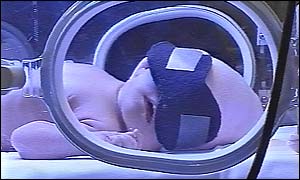 Baby Alannah Lewis: Rhesus disease sufferer
Scientists have developed a blood test which tells pregnant mothers if they are carrying a baby with a potentially fatal blood reaction. Rhesus disease is caused by the mother's immune system reacting against her baby's blood.
The test could spare babies from having a high risk amniocentesis test, which can itself cause Rhesus disease, to diagnose the condition. If a mother's blood is rhesus negative, and that of the developing fetus is rhesus positive, when they mix, the mother produces antibodies which destroy the baby's red blood cells. This makes the baby anaemic, and the baby's heart can fail. In severe cases the baby has to have intrauterine blood transfusions. Foetal DNA Doctors now use the amniocentesis test, where a long needle is put into the womb, but this carries a risk of miscarriage as well as making Rhesus disease more severe. But researchers from the foetal medicine department at the University of Bristol have developed a test of the mother's blood which is 100% accurate in detecting the baby's blood group. It is already being offered to mothers across the UK and even further afield. The test works by checking foetal DNA, which can be found in the mother's blood. Professor Peter Soothill and his colleagues used DNA extracted from maternal blood plasma to test what the baby's blood group is. It has been known for decades that foetal cells can be found in maternal blood during pregnancy, but it has previously been technically too difficult isolate them. Surprise Professor Soothill said: "What is really extraordinary and was a great surprise to me is that there is a lot of free-floating foetal DNA in pregnant women's blood. "Probably the cells in the placenta break and release the genetic material into the women's blood. "This means by taking a simple blood sample from a pregnant women you can access to the unborn baby's DNA." Professor Soothill said the test had great potential. "The implications are that we might be able to use this for other forms of early testing in pregnancy." Alannah Lewis is one baby affected by Rhesus disease. She has had to have a course of light treatment for jaundice caused by the condition. She also had three blood transfusions through her mother Rachel's womb to treat the disorder. | |
See also:  11 May 02 | Health 03 Jan 01 | Health 22 Jul 02 | Health Internet links: The BBC is not responsible for the content of external internet sites Top Health stories now: Links to more Health stories are at the foot of the page. | |||||||||||||||||||||||||||||||||||||||||||||||||||||||||||||||||||||||||||||||||||||||||||||||||||||||||||||||||||||||||||||||||||||||||||||||||||||||||||||||||||||||||||||||||||||||||
| |
|  E-mail this story to a friend E-mail this story to a friend |
| |
| Links to more Health stories |
| | | ||
 | ||||
 | | Back to top
| ||
| ---------------------------------------------------------------------------------- To BBC Sport>> | To BBC Weather>> | To BBC World Service>> ---------------------------------------------------------------------------------- © MMIII | News Sources | Privacy |






