
|
 |
 | | | | | | ||||||||||||||||||||||||||||||||||||||||||||||||||||||||||||||||||||||||||||||||||||||||||||||||||||||||||||||||||||||||||||||||||||||||
| | | You are in: Health | ||||||||||||||||||||||||||||||||||||||||||||||||||||||||||||||||||||||||||||||||||||||||||||||||||||||||||||||||||||||||||||||||||||||||||
|
| | Monday, 28 October, 2002, 17:29 GMT GM cells help fight cancer 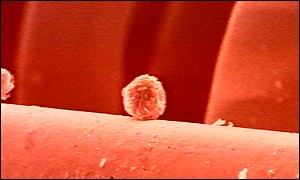 Genetically altered stem cells could help patients Specially adapted stem cells could help patients beat advanced blood cancers, researchers say. The genetically modified cells are "strengthened" so they are not damaged by chemotherapy. Cancer Research UK scientists say the new technique could make stem cell transplants safer and more effective. Stem cells can generate many types of adult cell, including immune system cells which can recognise and kill cancer cells.
But the strong doses of chemotherapy which often follow the transplants can cause side effects and can kill the donor cells. Protective effect Lower doses of chemotherapy can generate an anti-cancer immune response, but patients often go on to suffer a recurrence of the disease. Researchers from the Paterson Institute in Manchester grew stem cells in the laboratory and added a specially selected gene called Atase. This gene gives resistance to the toxic effects of chemotherapy and boosts the survival of donor stem cells in patients receiving chemotherapy. This should mean patients can be given high-dose chemotherapy if leukaemia or lymphoma recurs after a transplant. Giving chemotherapy after a transplant attacks cancer cells and kills off the patient's own stem cells, leaving only the transplanted stem cells alive. The transplanted stem cells then multiply to fill the gaps, boosting the anti-cancer immune response and increasing the effectiveness of the transplant. Doubly effective Dr Raj Chopra of Manchester's Paterson Institute, who led the research, said: "Our new system, which we call genetic chemoprotection, prevents donor stem cells from being harmed by chemotherapy and so should allow us to use much higher doses than would otherwise be possible. "The immune response is entirely generated by the cells we've transplanted. "The higher the proportion of donated stem cells, the stronger will be the immune system's anti-cancer effect. "The end-point is a treatment with the potential to be doubly effective." Dr John Toy, medical director of Cancer Research UK, says: "There's a real need to develop innovative new treatments for those patients whose cancers are resistant to conventional therapies. "Dr Chopra's research combines two of the most exciting areas of medical science - stem cell research and gene therapy - to create a really clever potential treatment which may end up saving lives." Further work by the team will include studying human embryonic stem cells which can generate a wider variety of adult cells than cells taken from bone marrow and could therefore have the potential to provide more potent treatments. | | See also:  22 Oct 02 | Health 20 Oct 02 | Health 12 Dec 01 | Health 10 Oct 01 | Health 06 Jul 99 | Science/Nature Internet links: The BBC is not responsible for the content of external internet sites Top Health stories now: Links to more Health stories are at the foot of the page. | ||||||||||||||||||||||||||||||||||||||||||||||||||||||||||||||||||||||||||||||||||||||||||||||||||||||||||||||||||||||||||||||||||||||||
| |
|  E-mail this story to a friend E-mail this story to a friend |
| |
| Links to more Health stories |
| | | ||
 | ||||
 | | Back to top
| ||
| ---------------------------------------------------------------------------------- To BBC Sport>> | To BBC Weather>> | To BBC World Service>> ---------------------------------------------------------------------------------- © MMIII | News Sources | Privacy |





