
|
 |
 | | | | | | ||||||||||||||||||||||||||||||||||||||||||||||||||||||||||||||||||||||||||||||||||||||||||||||||||||||||||||||||||||||||||||||||||||||||
| | | You are in: Health | ||||||||||||||||||||||||||||||||||||||||||||||||||||||||||||||||||||||||||||||||||||||||||||||||||||||||||||||||||||||||||||||||||||||||||
|
| | Wednesday, 23 October, 2002, 09:52 GMT 10:52 UK A&E doctors get child disease advice 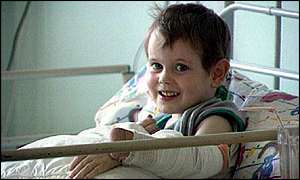 Doctors will be able to follow simple colour-coded charts Casualty doctors are to receive guidelines to help them spot life-threatening conditions in children. Each A&E department in the UK will receive a set of the colour-coded guidelines designed to help doctors detect three of the most common conditions - seizure, diarrhoea and breathing difficulties. More than 3.5 million children are seen in A&E departments every year, many of them by doctors who do not specialise in paediatric medicine.
They are being distributed by the charity Children Nationwide, which funds research into childhood illness. Cut waiting times They were put together by a team led by Professor Terence Stephenson at the Queen's Medical Centre in Nottingham. He first carried out a study looking at 40,000 children in Wakefield Nottingham and London over a year to see what medical problems children came to A&E with. Breathing difficulty, seizure and diarrhoea made up 50% of the medical problems seen. Each set of guidelines was put together by experts from across the UK, and has been tested and studied in Queen's Medical Centre's A&E department for eight months. They are presented on laminated sheets so they can be displayed in the department for all staff to follow. The charity said the trials had shown the guidelines could be used to cut waiting times in A&E and meant children were given more appropriate tests and treatments, as well as being crucial when patients needed emergency care. Speed Professor Stephenson told BBC News Online: "Children don't come with a big flag saying they have asthma or meningitis. "They come in with a cough, or a high temperature." He said the material would be familiar to specialists in emergency paediatric medicine, but many children were seen by generalist A&E doctors. "They might be seeing an 80-year-old with a hip fracture first and a heart attack victim after. "I don't think there's any evidence of children getting misdiagnosed, but these guidelines should speed up the process of treating children in A&E, and they won't have to have tests they don't really need." Dr Ian Maconochie, paediatric A&E consultant at St Mary's NHS Trust, London, said: "These guidelines will help to ensure that children receive the best care possible; they act as an invaluable guide to the treating clinician and ensure that parents can be confident that the optimum treatment is delivered to their child. "This should reassure doctors and families alike. It is a demonstration of putting research into practice to help one of society's most vulnerable groups." Invaluable Professor John Henry, a member of the British Association of Emergency Medicine, told BBC News Online any information which could help A&E doctors was welcome. "The information will not just be useful for consultants. It's often the junior doctors who need this advice." Kedge Martin, chief executive of Children Nationwide, said: "This is one of our most ambitious projects to date and one which we feel sure could dramatically improve the speed at which different conditions can be treated. "Each hospital around the country has been provided with the guides free of charge and we at Children Nationwide believe that they are an invaluable resource." | | See also:  16 Oct 02 | Health 23 Jan 02 | Health 20 Sep 00 | Health 13 Oct 99 | Health 28 Apr 99 | Health Internet links: The BBC is not responsible for the content of external internet sites Top Health stories now: Links to more Health stories are at the foot of the page. | ||||||||||||||||||||||||||||||||||||||||||||||||||||||||||||||||||||||||||||||||||||||||||||||||||||||||||||||||||||||||||||||||||||||||
| |
|  E-mail this story to a friend E-mail this story to a friend |
| |
| Links to more Health stories |
| | | ||
 | ||||
 | | Back to top
| ||
| ---------------------------------------------------------------------------------- To BBC Sport>> | To BBC Weather>> | To BBC World Service>> ---------------------------------------------------------------------------------- © MMIII | News Sources | Privacy |





